
Expo Peru Industrial 2026 closed on August 22. Thor Electric spent three days at booth E43 in Lima, and instead of listing everything we put on the table, this recap covers the part that was actually useful to us: the questions people brought to the booth, and what those questions say about surge protection in Peru right now.
Three days at Expo Peru Industrial 2026
Expo Peru Industrial 2026 ran from August 20 to 22 at Convexia Expo Center, Av. Javier Prado Este 4406, Santiago de Surco, Lima. The event puts metalworking, energy, steel and foundry, logistics, industrial safety and coatings in the same building, so the crowd is broad. Thor Electric showed AC, DC and signal line surge protective devices at booth E43.
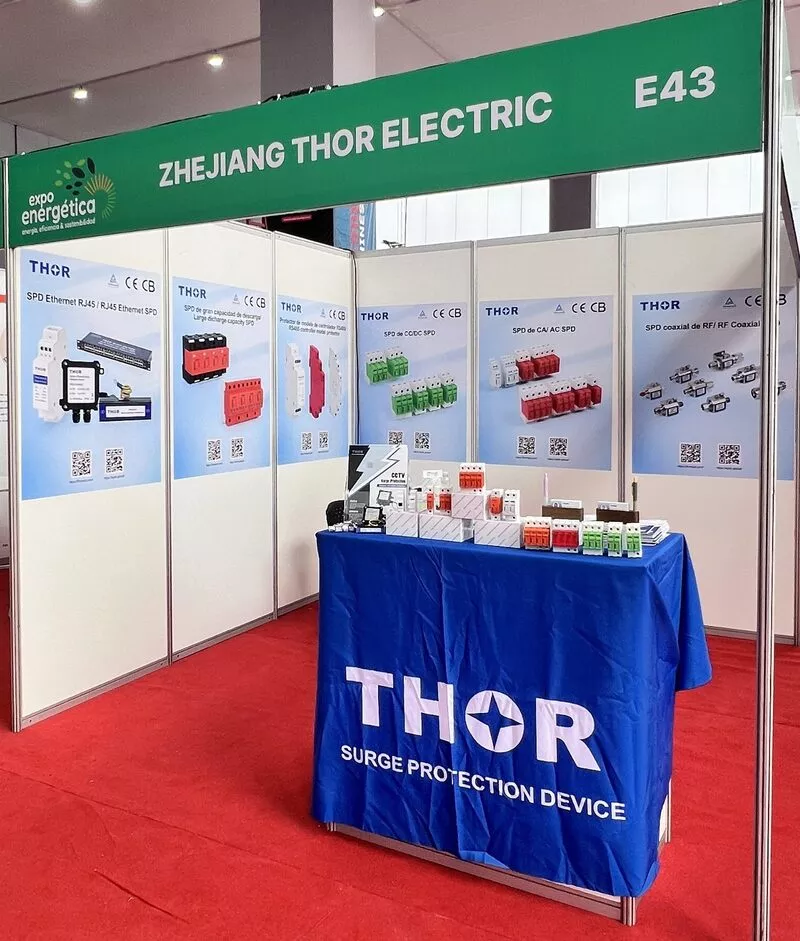
Figure 1 — Thor Electric booth E43 at Expo Peru Industrial 2026, Convexia Expo Center, Lima.
The traffic pattern was different from the European shows we do. Fewer people walking the aisles with a tote bag, more people arriving with a specific problem: a distribution board that keeps losing its controller, a PV plant that lost two inverters in one storm season, a client in the sierra asking for something that survives longer than what they installed last year. Several visitors pulled out phone photos of their existing panels and asked what should go where.
That made the conversations technical fast, which is the best thing that can happen at a booth.
The questions we got at booth E43
Four topics came up again and again over the three days.
Which Uc fits a 220 V network?
Peru runs 220 V at 60 Hz, and a lot of people assume an SPD sold into Europe is wrong for that. It is not. The frequency changes nothing for the SPD, and our standard plug-in modules are rated Uc 275 V AC, which sits correctly above 220 V line to neutral with room for temporary overvoltage. For 380 V three-phase distribution the TRS7 series covers it at Uc 385 V AC. When a site has a weak or unstable supply, we can also build modules at 320 V or 420 V.
Do I really need a Type 1 SPD?
The honest answer depends on the building, not on the budget. If there is an external lightning protection system, or the service comes in on an overhead line, part of the direct lightning current will find its way into the installation and you need a device tested at 10/350 µs. Our AC surge protection device range covers this with the TRS-A series, which uses a graphite gap at Iimp 15 kA, 25 kA and 50 kA. Where the panel has no room for a separate Type 1 plus Type 2 cascade, the TRS8-B+C does both in one module at Iimp 12.5 kA, In 30 kA, Imax 60 kA, Up ≤1.5 kV.
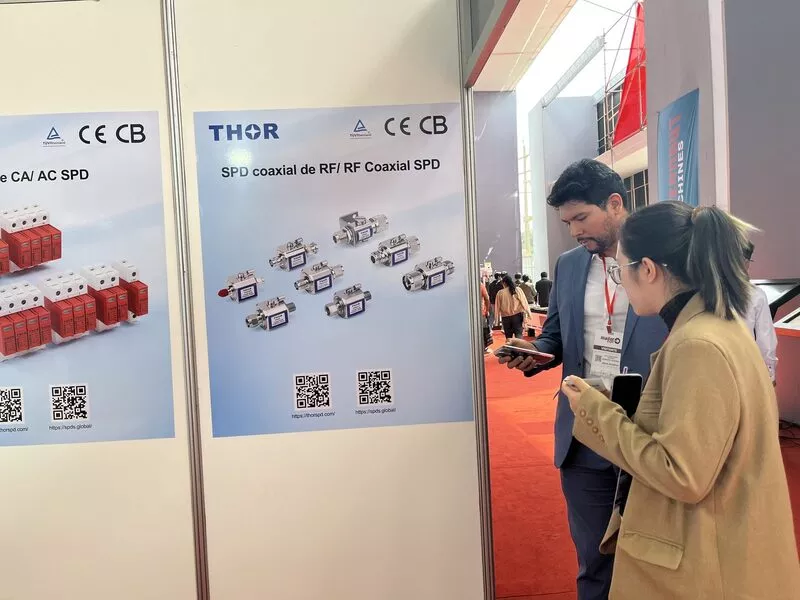
Figure 2 — Visitors going through the AC and RF coaxial SPD boards at booth E43.
What about mining sites at altitude?
This one is specific to Peru and it came up more than we expected. Concentrator plants and pumping stations sitting above 4,000 m mean thinner air, reduced clearance performance inside enclosures, and long feeder runs to remote substations. Long runs are the part people underestimate: once the SPD is more than about 10 m of cable from the equipment it protects, oscillation can push the voltage at the load well above the Up of the device, and you need a second stage closer in. We walked through that with several contractors, and it is covered in detail in our guide to SPD coordination.
How do I protect a 1500 V PV string?
Solar came up constantly, both rooftop commercial and utility scale. In our PV surge protection device range, the TRS3-C40 in Y configuration covers Ucpv up to 1800 V DC with In 20 kA and Imax 40 kA. For rooftop arrays bonded to a lightning protection system where separation distance cannot be met, the Type 1+2 PV modules add Iimp at the 10/350 µs waveform. If you are sizing a string combiner installation, our SPD for solar panels article has the wiring detail.
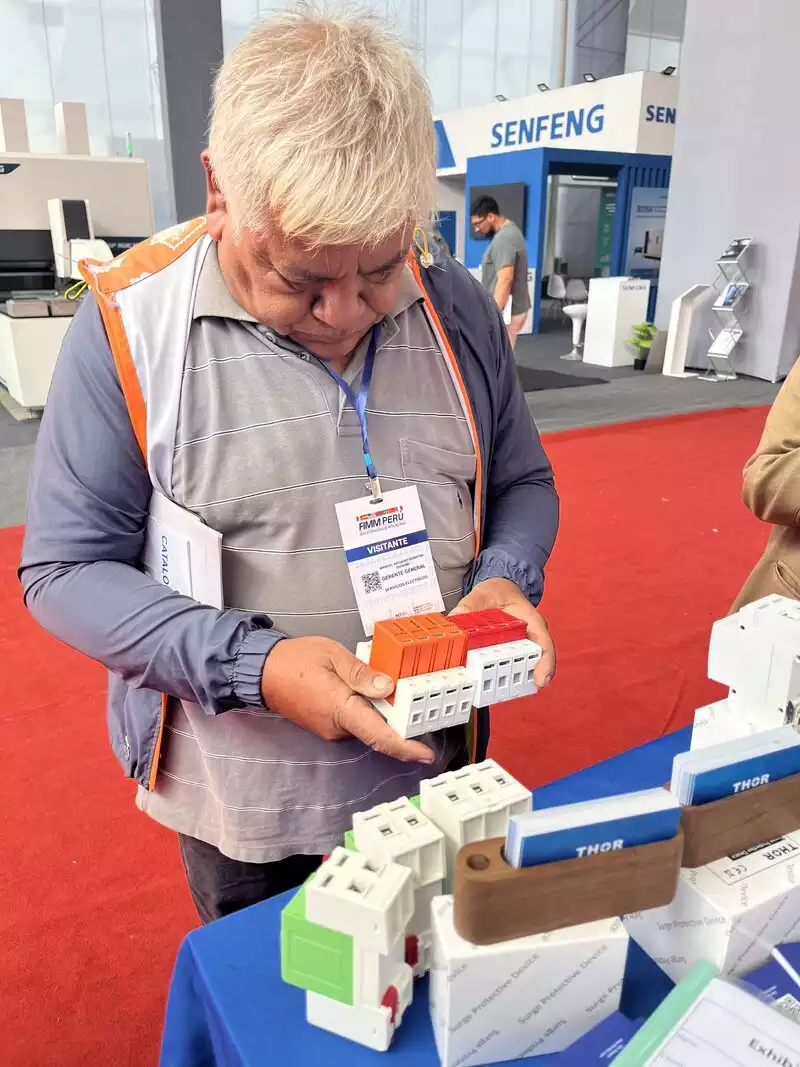
Figure 3 — A visitor checking the pluggable module design on Thor Type 2 and Type 1+2 SPDs.
What people picked up off the table
The pluggable module design did most of the selling by itself. Visitors would pull a cartridge out of its base, look at the red indicator window, push it back in, and then ask what it costs to keep spares on site. For plants running unattended shifts, the remote signaling contact was the follow-up question every time: a dry contact into the PLC or SCADA so a dead module reports itself instead of waiting for the next inspection.
On the signal side, the TRSS-RJ45 protectors drew attention from anyone running cameras or network gear outdoors. The IP68 version in particular, since a camera pole is one of the few places where lightning gets a clean path into a data network. RS485 protection for PLC and instrumentation lines was the other regular ask, mostly from food processing and mining automation people.
Thanks, Lima
Thanks to everyone who came by E43 over the three days, and to the local partners who brought clients to the stand. Peru is a market where the surge problem is real and the installed protection is often thin, so the conversations were worth the flight.
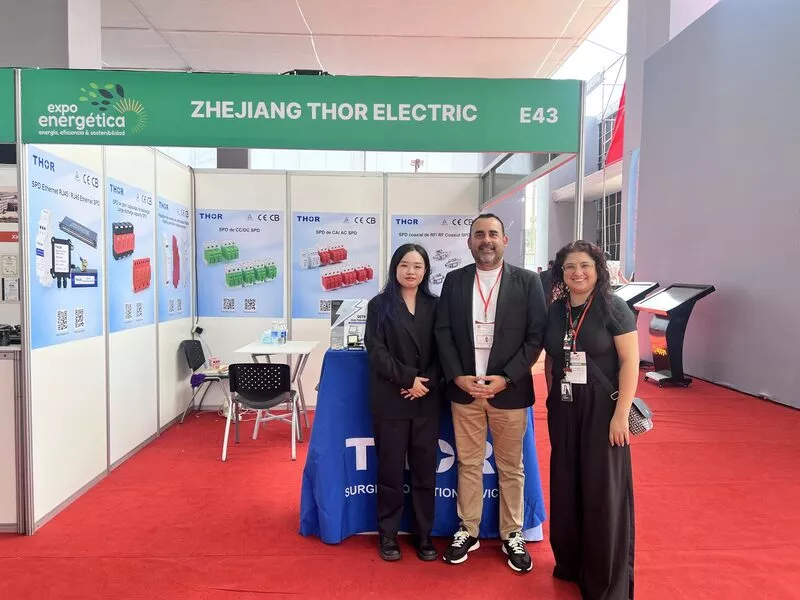
Figure 4 — Booth E43 on the last day of Expo Peru Industrial 2026, Lima.
Thor Electric surge protective devices
Thor Electric has manufactured surge protective devices in Yueqing, Zhejiang since 2006, with AC, DC, PV and signal line ranges certified to IEC 61643-11, IEC 61643-31 and IEC 61643-21, plus TUV, CE, CB and RoHS. We support OEM projects from one piece, and samples are available for evaluation. If you missed us in Lima, send your panel drawings or project specs through our contact page and our engineers will size the protection with you.