
The Real Threat to Outdoor Ethernet Networks
Outdoor Ethernet surge protection starts with understanding the risks that indoor installations rarely face. Selecting the right RJ45 surge protection device is a practical necessity for any cable run that exits a building or spans between structures. When lightning strikes near a cable — even without a direct hit — the induced electromagnetic pulse can inject thousands of volts into the data line within microseconds. This transient overvoltage travels along the cable and reaches connected equipment before any standard protection circuit can respond.
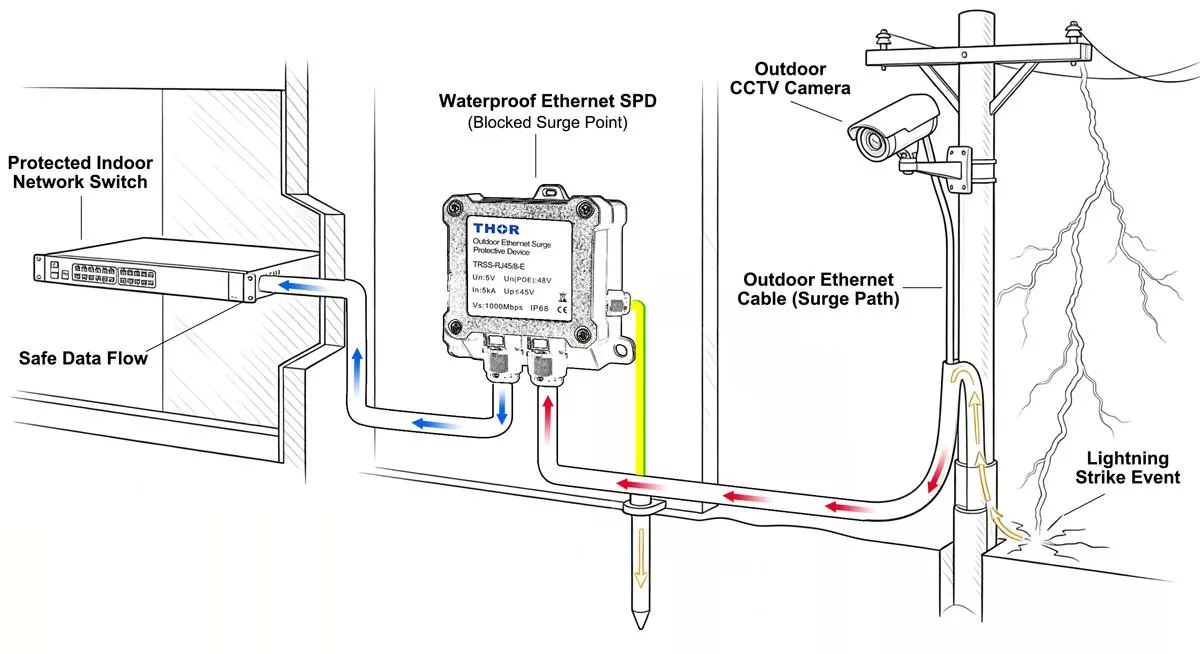
Figure 1 – Ethernet surge protection: how lightning current travels from outdoor cable to indoor equipment
Ground potential rise is another overlooked threat. During a lightning event, the local ground voltage at one end of a cable can spike dramatically relative to the other end. This voltage difference — sometimes several kilovolts — drives destructive current through the Ethernet cable and directly into the network interface of switches, cameras, or controllers.
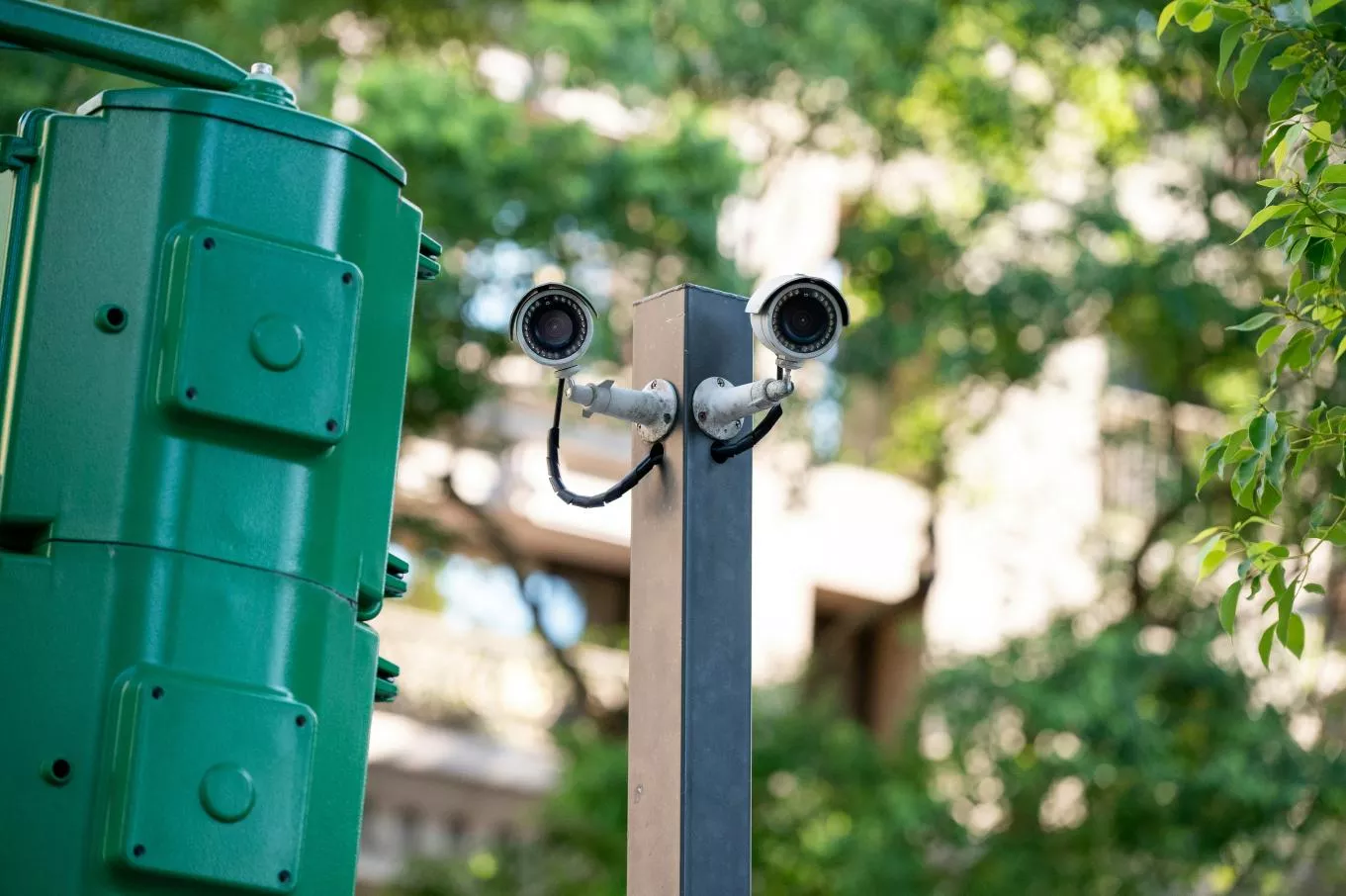
Figure 2 – Figure 2 – Outdoor IP camera installation requiring ethernet surge protection
The damage is rarely contained to one device. Surge current travels the network — everything sharing that cable run is at risk. A single strike can take out the camera, the switch it feeds into, and the access point on the same circuit. Replacing the hardware is the visible cost. Getting a security system or factory network back online after an unplanned outage is the one that adds up.
Put simply: if the cable leaves the building, or connects equipment mounted on a pole, a rooftop, or an outdoor enclosure, the question is not whether to add surge protection. It is which device to use.
Why Standard RJ45 SPDs Fall Short Outdoors
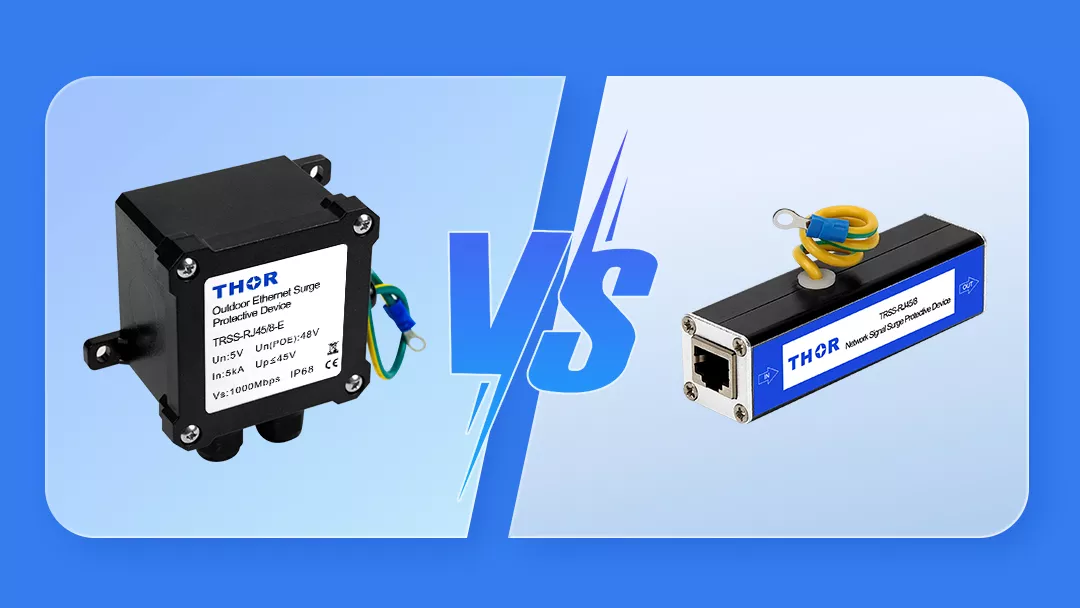
Figure 3 – Figure 3 – outdoor RJ45 SPD vs indoor IP68 surge protection device: enclosure and rating comparison
Walk into any electrical distributor and you will find plenty of RJ45 SPDs on the shelf. Most of them work fine — inside a building. The problem starts when someone installs one in a weatherproof enclosure on a rooftop, mounts it on a pole in a parking lot, or wires it into a junction box on the side of a factory wall.
Standard indoor SPDs carry no meaningful ingress protection rating. The housing is designed to keep fingers out, not water. In a humid climate, condensation alone is enough to start corroding the internal MOV or GDT components within months. After a season of temperature cycling — expansion and contraction of the housing, cable glands, and PCB — small gaps form. Rain follows.
The failure mode is insidious. The device does not stop working immediately. It degrades. Protection levels drop, clamping voltage rises, and the SPD continues to pass network traffic normally right up until a surge event reveals that the protection is no longer there.
Outdoor installations also face temperature ranges that standard SPDs are not rated for. A steel enclosure in direct sun in summer, the same enclosure in a northern winter — the operating range can span 80°C or more. Components specified for 0°C to 40°C do not belong in that environment.
For any outdoor RJ45 surge protection device, the IP rating is not a marketing specification. It is the difference between a device that survives its first winter and one that is quietly failing by spring.
What IP68 Protection Rating Actually Means
IP ratings come from IEC 60529, and the two digits are independent — each is tested separately and tells you something different.
The first digit is about solids. A rating of 6 means the enclosure is fully dust-tight — no ingress under any test condition. In practice, this matters more than it sounds. Fine particulate from cutting, grinding, cement mixing, or grain handling finds its way into anything with a gap. Once inside, it settles on PCB surfaces and between terminals. Dust is not inert — it absorbs moisture and creates resistive paths between conductors that were never meant to touch.
The second digit is about water. IP67 covers temporary immersion to one meter; IP68 goes further, with conditions set by the manufacturer that typically exceed one meter for extended durations. What this translates to in the field: direct rain, standing water on horizontal surfaces, pressure washing during routine maintenance, and months of high humidity — none of these compromise the seal.
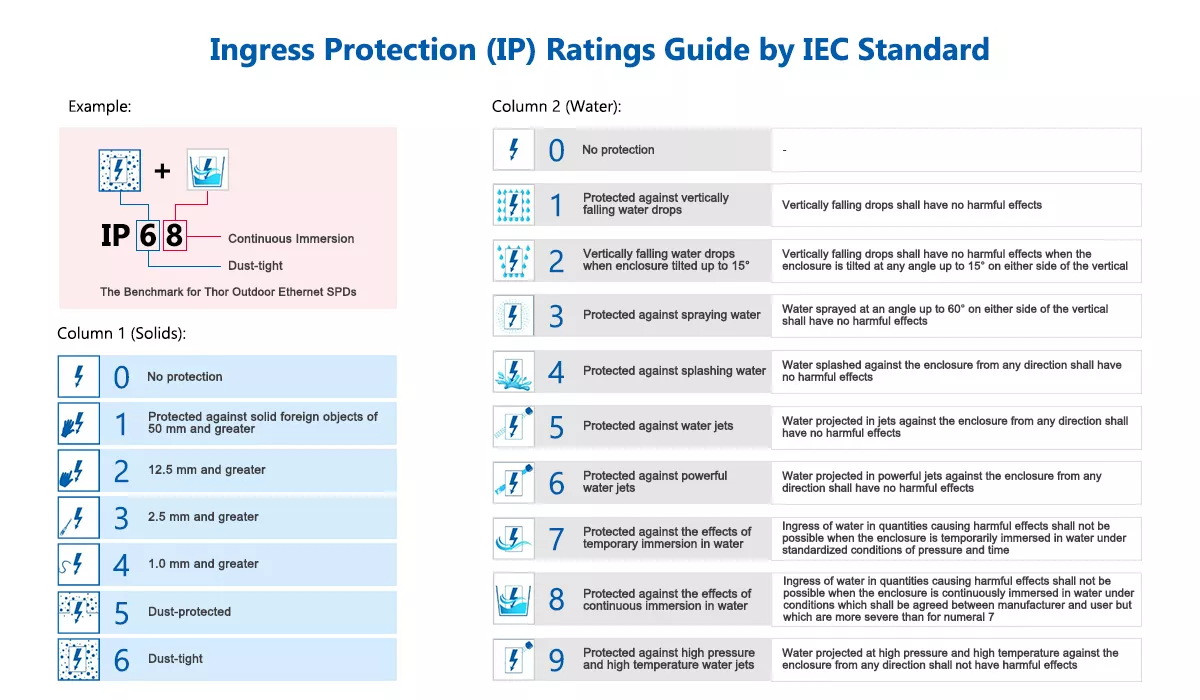
Figure 4 – IP ingress protection rating chart: IP68 meaning for outdoor ethernet surge protection
What this means for an outdoor SPD installation: the protection level does not degrade because of environmental exposure. The device sealed at the factory stays sealed in the field. Internal components — MOV, GDT, PCB traces, terminal connections — remain isolated from the conditions outside the housing.
One point worth noting: IP68 addresses ingress only. It says nothing about operating temperature range, UV resistance, or vibration tolerance. For a complete outdoor specification, verify the temperature rating separately. A device rated IP68 but specified only to 60°C is not suitable for direct sun exposure in a hot climate.
For permanent outdoor Ethernet installations, IP68 combined with a -40°C to +85°C operating range covers the realistic conditions the device will face over a five to ten year service life.
Key Specifications to Evaluate in an Outdoor RJ45 SPD
Choosing an outdoor RJ45 surge protection device requires evaluating more than just the IP rating. The following specifications determine whether the device will actually perform when a surge hits — and whether it will still be performing five years later.
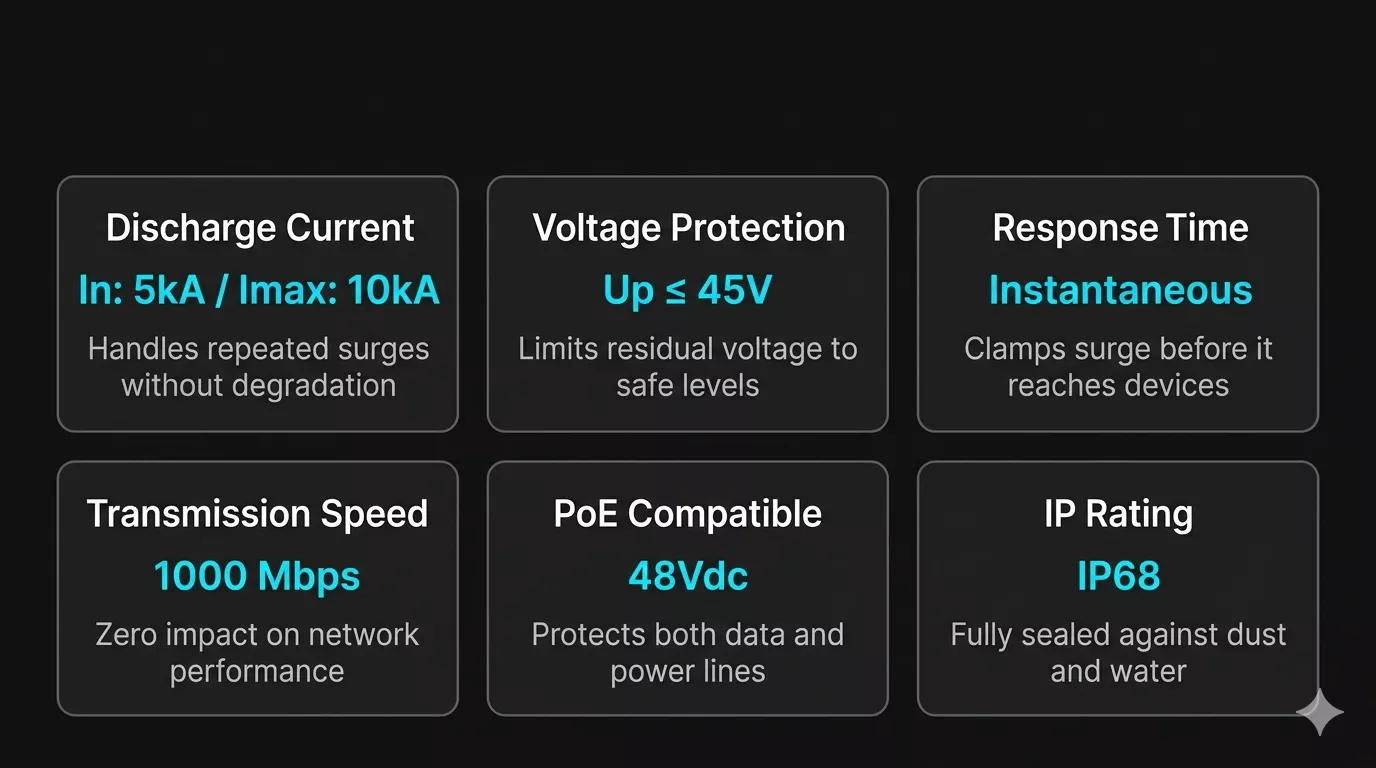
Figure 5 – Key specifications for selecting an outdoor ethernet surge protection device: In, Imax, Up, IP68
Discharge current (In / Imax)
The nominal discharge current (In) indicates the surge level the device handles repeatedly without degradation. The maximum discharge current (Imax) is the peak the device can withstand in a single event. For outdoor installations, look for In ≥5kA and Imax ≥10kA per the 8/20μs waveform.
Voltage protection level (Up)
This is the residual voltage across the SPD terminals during a surge event. A lower Up means less voltage reaches connected equipment. For Ethernet SPDs, Up ≤45V is the target value.
Response time
Surge events develop in nanoseconds. An SPD with instantaneous response ensures clamping begins before the transient reaches network interfaces.
Transmission speed
The SPD must not degrade network performance under normal operating conditions. Verify compatibility with Gigabit Ethernet — 1000Mbps throughput with ≤0.5dB insertion loss is the standard benchmark.
PoE compatibility
Power over Ethernet operates at 48V DC on specific pin pairs. An outdoor SPD used with PoE-powered cameras or access points must handle both the data lines and the PoE voltage without interference.
Standards compliance
IEC 61643-21 and EN 61643-21 define the test procedures for signal line SPDs. Compliance confirms the device has been tested to defined surge levels and protection parameters — not just specified on paper.
Typical Applications

Figure 6 – Typical ethernet surge protection applications: seaport, factory, parking lot and solar farm
Outdoor RJ45 surge protection devices and signal line SPDs are deployed wherever Ethernet cables transition between indoor and outdoor environments, or run across open ground between separate structures.
When selecting an RJ45 surge protection device for outdoor use, installation environment should be the first consideration.
Ethernet surge protection at these transition points is the single most effective way to prevent cascade failures across connected equipment.
IP surveillance and security systems
A typical outdoor camera installation runs Ethernet from a pole or rooftop back to an indoor switch or NVR — sometimes fifty meters, sometimes two hundred. That cable is a direct conductor. When lightning strikes anywhere near the run, the induced current travels the full length and hits every device connected to it. One strike, multiple cameras gone. The SPD breaks that conduction path before the surge reaches the equipment.
Industrial and infrastructure networks
The scale of industrial Ethernet installations creates exposure that office networks never face. A port terminal might run data cable across several hundred meters of open yard to reach crane controllers and gate systems. A factory floor connects PLCs, sensors, and HMI panels across a building where heavy machinery generates its own electrical noise on top of whatever comes in from outside. These are not environments where a failed network interface is a minor inconvenience — when the PLC loses communication, the line stops. Surge protection in these settings gets specified the same way grounding does: not optional, not an afterthought.
PoE-powered outdoor devices
Wireless access points, VoIP intercoms, and LED controllers draw power and data through the same RJ45 connection. PoE surge protection is critical here — a surge event that damages the network interface also takes out the power supply simultaneously, making a purpose-built signal SPD the most cost-effective safeguard for these installations. For a full range of signal line surge protection options, see Thor’s full range of Signal Surge Protection Devices
Building-to-building connections
Ethernet cables running between separate structures are at high risk for ground potential rise — an RJ45 surge protection device installed at each transition point is the standard mitigation. Any two buildings with independent grounding systems can develop significant voltage differentials during a lightning event.
Thor TRSS-RJ45/8-E — Designed for Outdoor Ethernet Protection
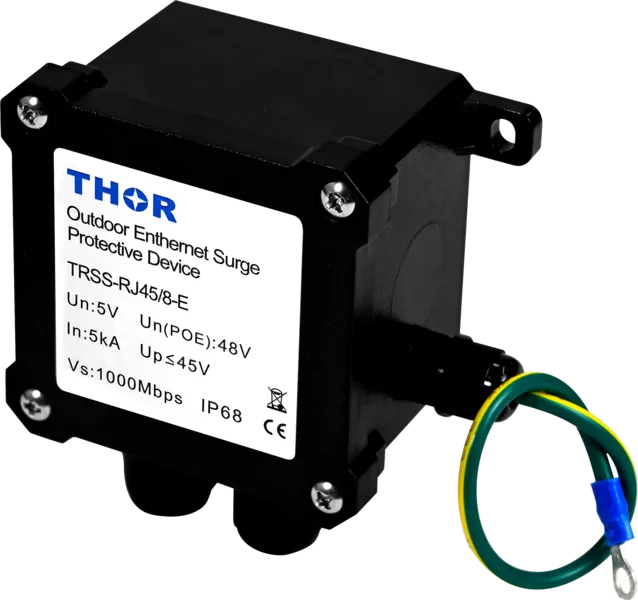 | |
Figure 7 – Thor TRSS-RJ45/8-E outdoor ethernet surge protection device: IP68 rated, PoE compatible — front view and connector detail
The TRSS-RJ45/8-E is Thor’s outdoor-rated signal surge protection device for Cat6 and PoE RJ45 networks. Engineered for permanent outdoor installation, it combines IP68 ingress protection with full Gigabit Ethernet compatibility and dual-line protection for both data and PoE power.
| Specification | TRSS-RJ45/8-E |
| Standards | IEC 61643-21, EN 61643-21 |
| Network input voltage (Pin 1/2/3/6) | 5Vdc |
| PoE voltage (Pin 4/5/7/8) | 48Vdc |
| Nominal discharge current (In) | 5kA |
| Max discharge current (Imax) | 10kA |
| Voltage protection level (Up) | 45V |
| Insertion loss | ≤0.5dB |
| Response time | Instantaneous |
| Max transmission speed | 1000Mbps |
| Connection type | RJ45 (Series) |
| Protective lines | Data: 1/2/3/6, PoE: 4/5/7/8 |
| Operating temperature | -40°C to +85°C |
| Environmental protection | IP68 |
Installation is straightforward. The TRSS-RJ45/8-E connects in series between the outdoor cable run and the protected device, with RJ45 female connectors on both input and output. Wall mounting and a dedicated grounding terminal ensure reliable field installation without specialized tools.
For outdoor Ethernet networks where reliability and equipment longevity matter, the TRSS-RJ45/8-E delivers certified surge protection in a housing built to last in the field.
Looking for specifications, pricing, or volume availability? Contact Thor’s technical team for product details and application support.