
Industrial surge protection has to survive conditions a consumer power strip was never built for: continuous duty, greater surge exposure from large motors and switchgear, and a wider temperature and humidity range than a home electronics device ever sees. Choosing the right industrial surge protection device comes down to three decisions: voltage compatibility with your system, the SPD type and installation point, and a surge current rating sized to your actual exposure, not the highest number on a datasheet. The selection principles here are universal, and the product examples are drawn from IEC-certified equipment used across Thor’s export markets in Europe, Africa, the Middle East, Southeast Asia, and South America.
What makes an SPD industrial-grade
An industrial surge protection device is a heavy-duty SPD built for continuous facility operation. Unlike a consumer surge protector for a single plug, it protects an entire electrical system, including motors, drives, and control panels, and it’s rated for surge currents, environmental stress, and duty cycles that consumer devices are never tested against.
A consumer surge protector plugs into a single outlet and absorbs occasional spikes for a handful of connected devices. It’s built for household loads and a controlled indoor environment. For industrial surge protection, the SPD sits inside the distribution system itself, at the service entrance, a distribution panel, or ahead of a motor drive or control cabinet, and protects everything downstream of that point.
Three things separate the two categories in practice:
- Surge current capacity. Industrial SPDs carry In and Imax ratings in the tens or hundreds of kiloamps, well beyond typical consumer surge protector ratings, because a lightning strike on a facility’s main service or a switching transient from heavy machinery carries far more energy than anything a household circuit sees.
- Scope of protection: a plug-in strip protects what’s plugged into it, while a panel-mounted industrial SPD protects motors, drives, PLCs, and every downstream circuit fed from that panel. One device, one installation point, system-wide coverage.
- Duty and environment: industrial SPDs are built for continuous operation across a wider range of conditions. Thor’s lines are rated for -40°C to +85°C and 5-95% humidity, well beyond what a consumer device is tested for.
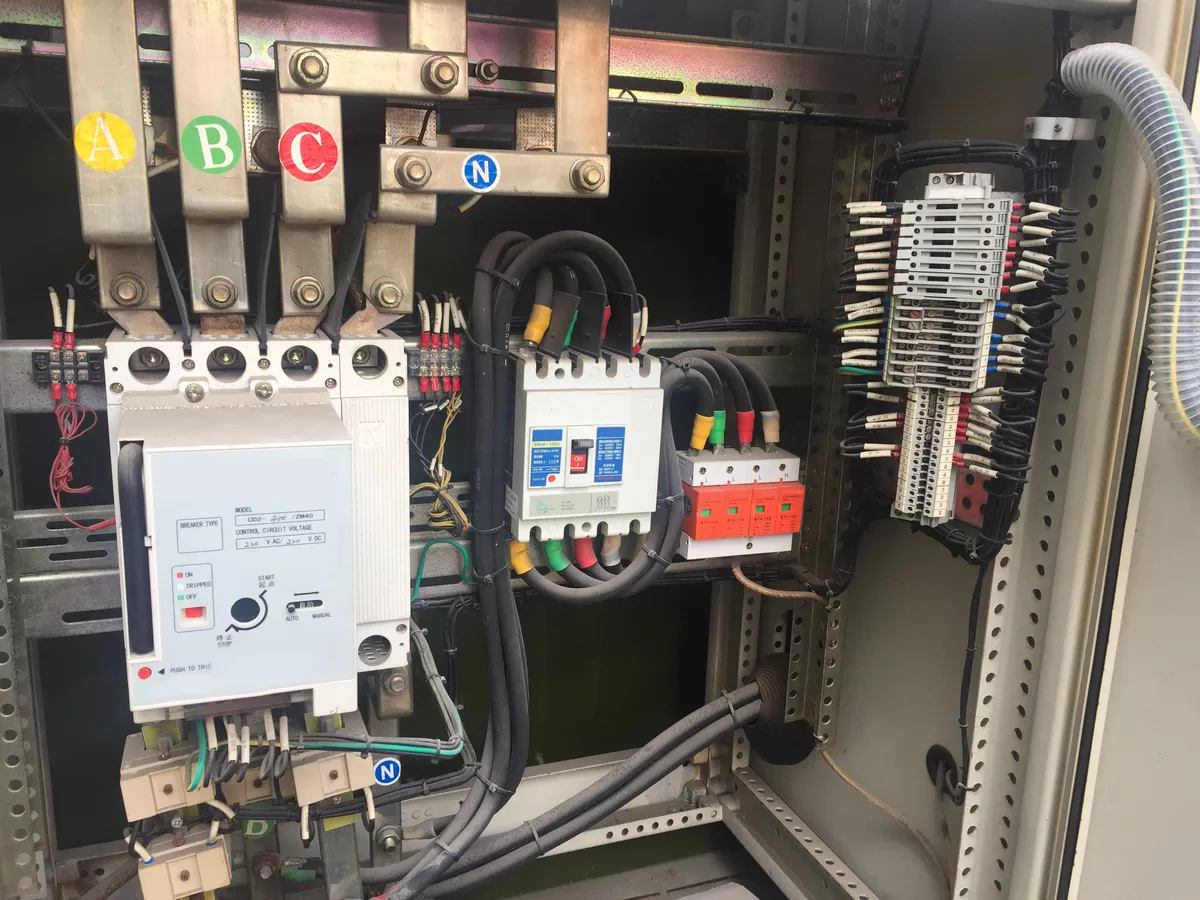
Figure 1 — Representative industrial distribution panel with DIN-rail SPDs protecting downstream production equipment.
Matching SPD type to installation point
A coordinated industrial surge protection design typically uses two or three SPD types together, each installed at a different point and covering a different part of the surge event.
Type 1 SPDs go at the service entrance, the point where the facility’s electrical system meets the incoming supply, or at the LPZ 0→1 boundary in buildings with an external lightning protection system. Thor’s TRS-A series uses graphite gap technology at this position, with Iimp (10/350µs) ratings from 15kA to 50kA depending on the model, response time under 100ns, and Up held to ≤2.0–2.5kV. It diverts the bulk of a direct or near-direct lightning current before the current reaches the rest of the system.
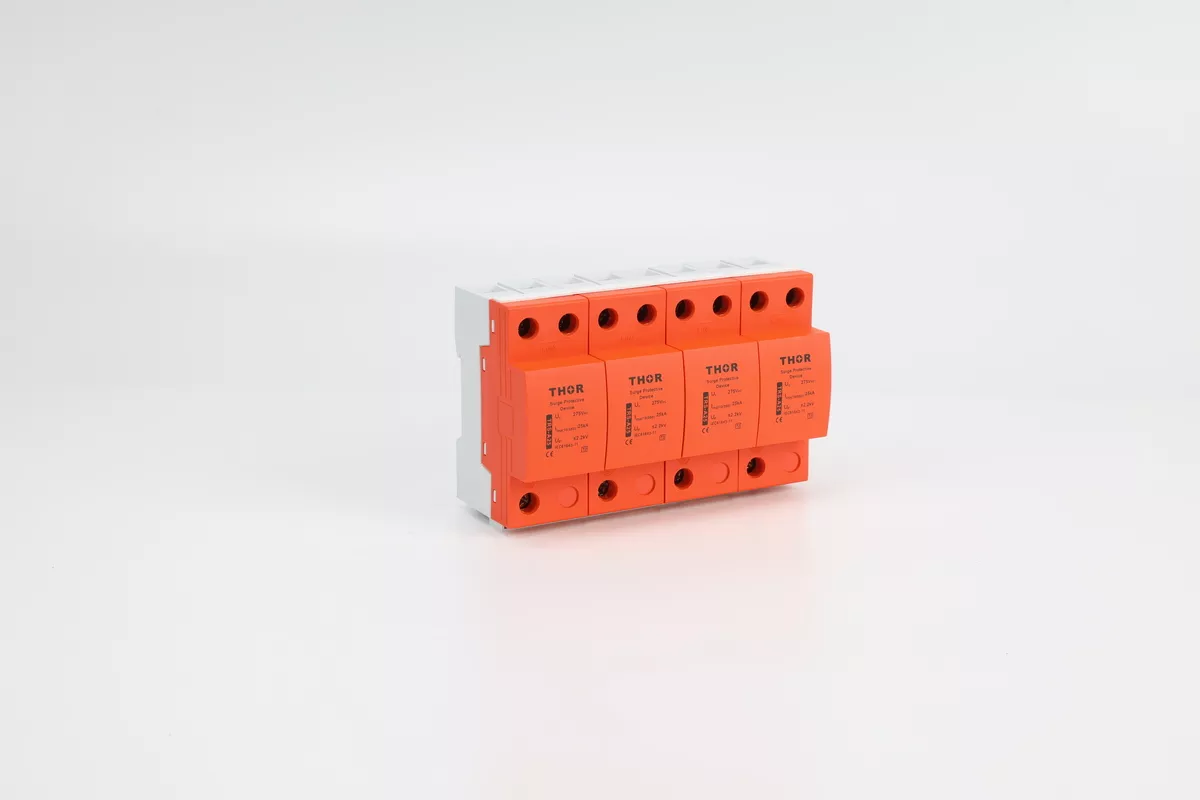
Figure 2 — Thor TRS-A Type 1 SPD for service-entrance and LPZ 0→1 protection.
Type 2 SPDs sit at distribution panels, downstream of the Type 1 stage. For panel surge protection, Type 2 is the main distribution-level device because every downstream circuit (lighting, motors, control systems) branches from that panel. Thor’s TRS7 series is built for 380V AC industrial systems at this position, with In/Imax ratings running from 40/80kA up to 100/150kA across the B80–B150 models.
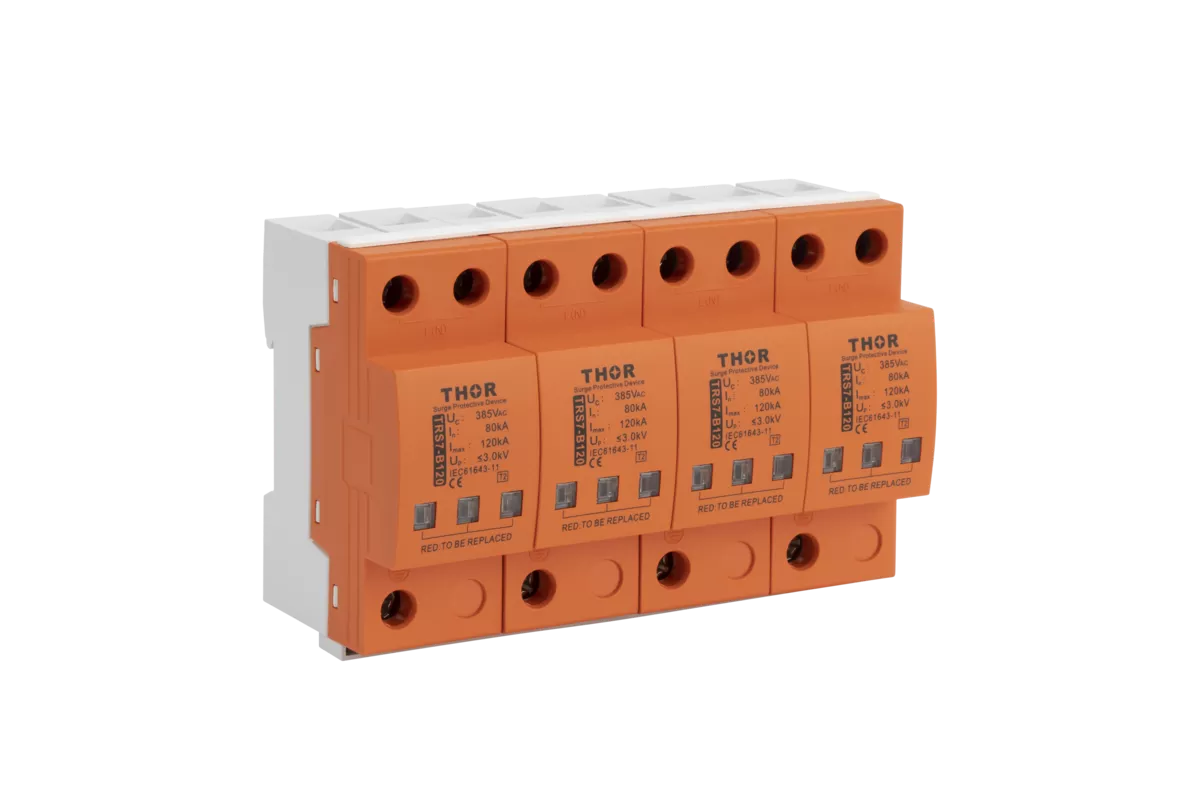
Figure 3 — Thor TRS7 Type 2 SPD for 380V AC industrial distribution panels.
Type 3 SPDs are point-of-use devices, installed close to sensitive equipment (a PLC input, a drive controller, an instrumentation panel) to catch any residual surge energy the upstream stages didn’t fully absorb. In a coordinated installation, Type 1 diverts the bulk energy, Type 2 covers the distribution-level surge, and Type 3 protects the specific device it sits next to. For a full breakdown of how the three types divide the work and coordinate together, see our Type 1 vs Type 2 vs Type 3 SPD comparison.
Figure 4 maps the installation point to the SPD type and the rating that matters at each stage.
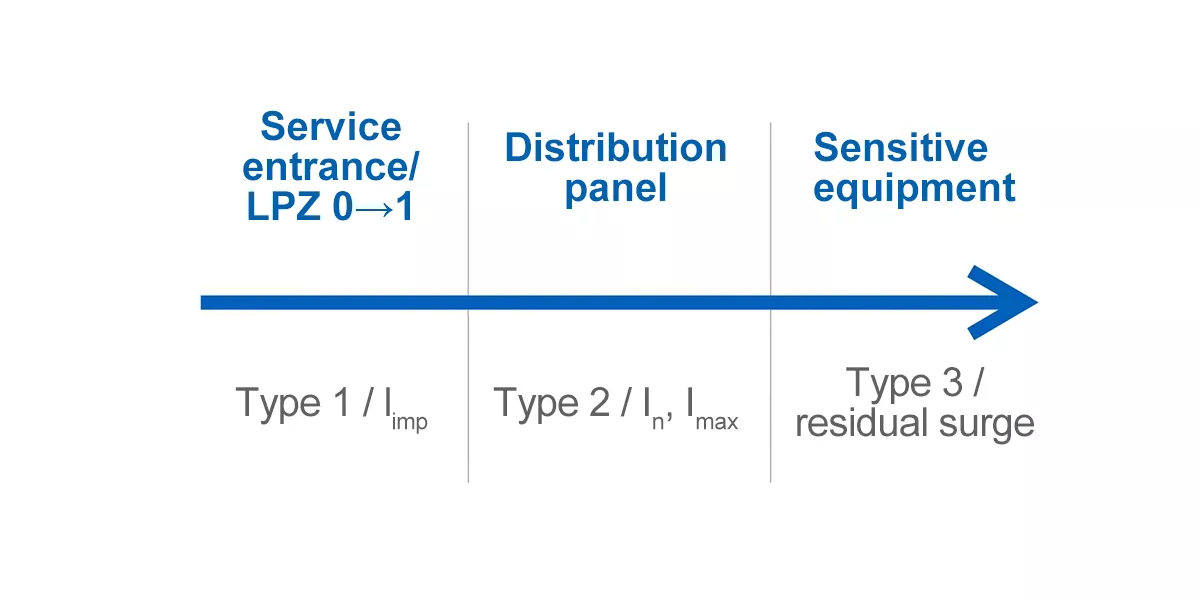
Figure 4 — Industrial SPD selection by installation point: Type 1 at the service entrance, Type 2 at distribution panels, and Type 3 near sensitive equipment.
Sizing for 3-phase industrial distribution
Sizing industrial surge protection for a 3-phase system starts with its voltage and earthing arrangement. A 3-phase surge protector must use the wiring configuration that matches that earthing system.
Common 3-phase SPD wiring configurations:
- 3+0: L1, L2, and L3 each connected to PE, no neutral connection (IT systems)
- 4+0: L1, L2, L3, and N each connected individually to PE
- 3+1: L1, L2, and L3 connected to N, plus one additional protector from N to PE (TN-S and TT systems)
Which configuration applies depends on the earthing arrangement: TN-S and TT systems typically use 3+1 (or 1+1 for single-phase branches), while IT systems use 3+0 (or 1+0). Getting this wrong doesn’t just reduce protection. It can create a fault path the SPD was never designed to carry. For a full breakdown of how each configuration applies, see our SPD wiring diagram guide.
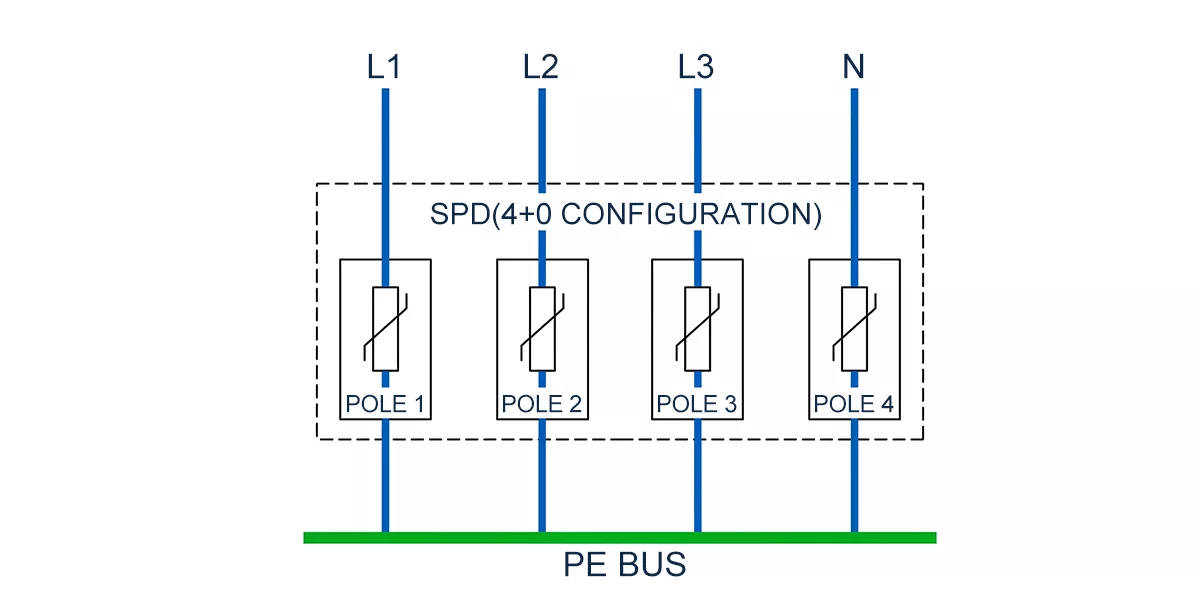
Figure 5 — 3-phase 4-wire 4+0 industrial SPD installation showing L1, L2, L3, and N individually connected to PE through a Type 2 SPD.
As shown in Figure 5, in a 4+0 installation the SPD taps each phase conductor and the neutral individually, routing surge current to PE without interrupting the circuit it protects. Depending on the model, the TRS7 series has a voltage protection level (Up) of ≤2.4–3.5kV, tested to IEC 61643-11 rather than a datasheet projection.
Reading the spec sheet: what the numbers actually mean
Industrial surge protection sizing depends on what each datasheet parameter controls, not on chasing the highest kA surge current rating.
- Uc (maximum continuous operating voltage): the highest voltage the SPD can withstand continuously without operating. It has to match the system voltage and expected temporary overvoltage conditions. A value that is too low can cause premature ageing or unwanted operation, while an unnecessarily high value can leave the installation with a higher protection level than the equipment requires.
- Up (voltage protection level): the peak voltage that reaches the protected equipment during a surge event. Lower is better, but Up has to be read against the equipment’s actual withstand voltage, not compared alone.
- In and Imax (nominal and maximum discharge current, 8/20µs): the discharge-current values used to classify and test a Type 2 SPD. In is the nominal 8/20µs discharge-current test value; Imax is the maximum 8/20µs discharge current declared for the device.
- Iimp (impulse current, 10/350µs): the rating that matters for Type 1 SPDs, simulating a direct lightning strike waveform rather than an induced surge.
Figure 6 turns the main datasheet parameters into a four-check selection sequence.
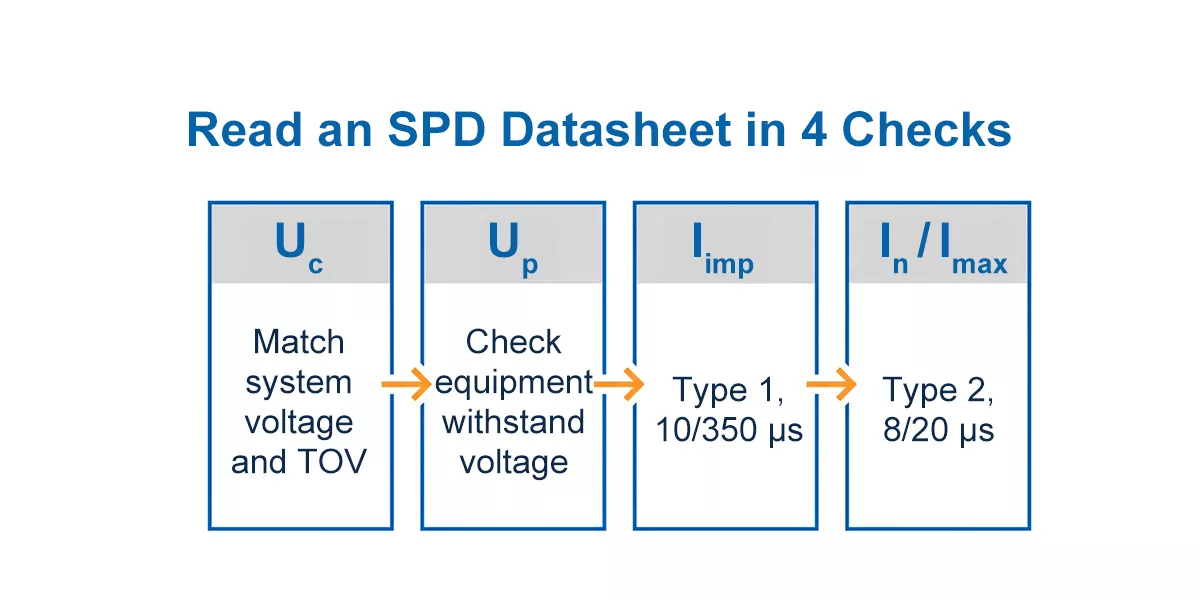
Figure 6 — Four checks for reading an industrial SPD datasheet: system voltage, protection level, Type 1 impulse current, and Type 2 discharge current.
A higher kA rating isn’t automatically better sizing. It has to match your facility’s actual lightning exposure, installation point, and the coordination between SPD stages. Oversizing a Type 2 SPD’s Imax beyond what that exposure and coordination actually call for adds cost without adding real protection. Note that this is separate from checking the facility’s prospective short-circuit current for breaker and SCCR coordination, which follows standard electrical design practice rather than SPD-specific sizing.
| Model | Type | Standard | *In* / *Imax* / *Iimp* | *Up* |
| TRS-A25 | Type 1 | IEC 61643-11 | Iimp 25kA (10/350µs) | ≤2.2kV |
| TRS7-B100 | Type 2 | IEC 61643-11 | In 60kA / Imax 100kA (8/20µs) | ≤2.5kV |
Where panel space is limited, a Type 1+2 combined device covers both stages in one module. Thor’s TRS8 series uses an MOV plus GDT hybrid design to do this, holding Up to ≤1.5kV in a single unit rather than two separate devices.
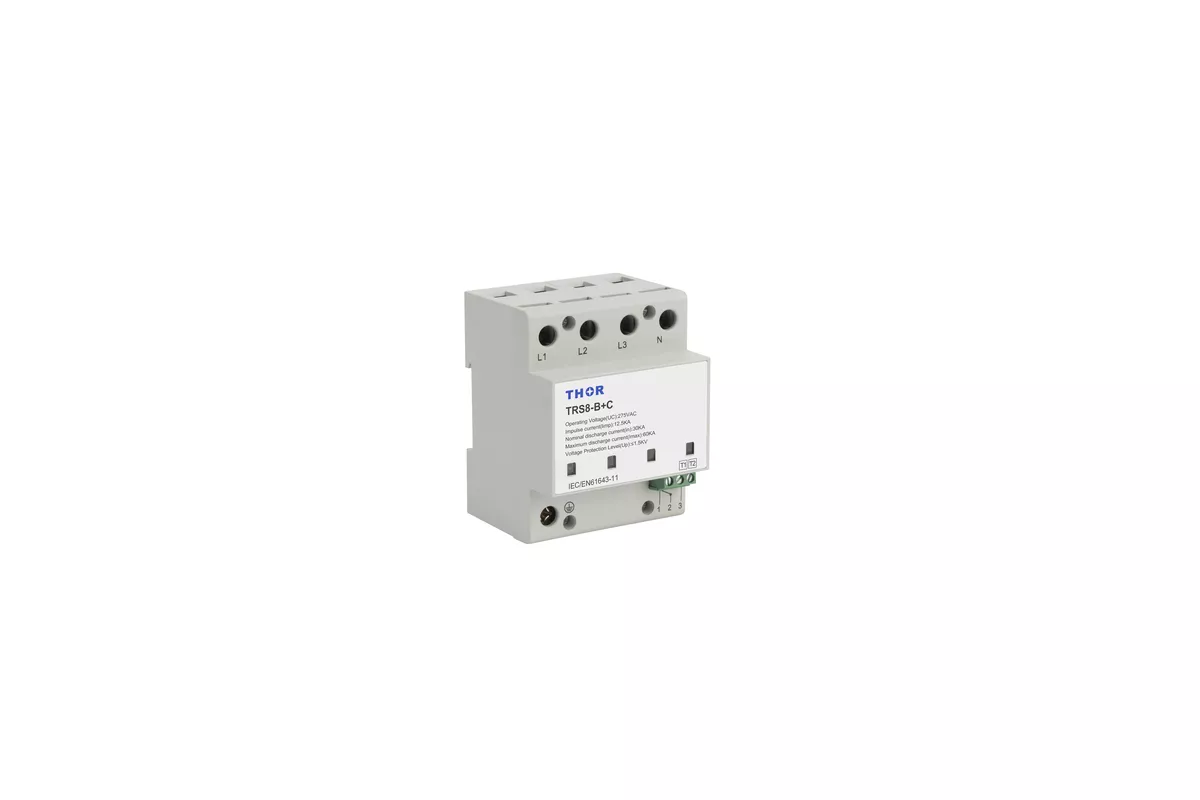
Figure 7 — Thor TRS8 combined Type 1+2 SPD with MOV and GDT technology.
Compliance: IEC 61643-11 and regional certification
IEC 61643-11 is the international test standard for AC surge protective devices, and the basis for certification across Thor’s IEC-market export regions covered in this article. It defines the test waveforms, classification (Type 1/2/3), and performance ratings that appear on an IEC-compliant SPD datasheet. Working with equipment tested to this standard is what makes the Up, In, Imax, and Iimp figures on a datasheet comparable across manufacturers within that market.
Beyond the test standard itself, three certification signals matter for industrial procurement:
- CE marking confirms compliance with the relevant EU directives and is standard for equipment sold into European markets.
- CB Scheme certification allows a test result from one IECEE member country to be recognized across other member countries, which matters for facilities sourcing equipment across multiple regions.
- TUV certification is an independent third-party test mark, useful as a verification point beyond the manufacturer’s own datasheet claims. Buyers can look up a certificate directly through TUV Rheinland Certipedia.
Thor’s SPD lines are tested to IEC 61643-11, CE and RoHS compliant, and manufactured under the relevant ISO management system, with TUV or CB certification available depending on the series.
Where industrial surge protection is used
Manufacturing plants run PLCs, drives, and automated machinery that stop production the moment a surge damages a control board. Type 2 SPDs at the distribution panel and Type 3 devices at PLC cabinets are standard practice here.
Data centers protect racks of servers and networking equipment where an unprotected surge means data loss and downtime, not just hardware replacement cost.
Telecom infrastructure, including base stations, switching equipment, and transmission lines, sits exposed to both lightning-induced surges on outdoor cabling and switching transients from the power grid, making coordinated Type 1/Type 2 protection standard at these sites.
What drives industrial SPD cost
Industrial surge protection cost varies by type, current rating, and certification depth, and the unit price alone doesn’t capture the real cost comparison. If a lower-cost unit needs more frequent replacement or carries less third-party certification, the total cost over the equipment’s service life can run higher than a properly specified unit priced higher up front.
The main structural price drivers are the certification and testing behind the device (IEC 61643-11 testing, CB Scheme, TUV verification), the component grade (graphite gap vs MOV, hybrid MOV+GDT designs), and the current rating required for the installation point. Compare industrial SPDs on total cost of ownership (replacement frequency, downtime risk, and certification confidence) rather than unit price alone.
Maintenance and module replacement
Thor’s SPD lines use field-replaceable pluggable modules. A degraded or spent module can be swapped without rewiring the panel, and a visual fault indicator (a red status window) identifies a module in a fault state that needs replacing.
FAQ
What is an industrial surge protector?
An industrial surge protector is a heavy-duty SPD installed within a facility’s electrical distribution system (at the service entrance, a distribution panel, or near specific equipment) rather than a plug-in device for a single appliance. It’s rated for higher surge currents, continuous operation, and harsher environments than consumer surge protectors.
Do industrial SPDs need to meet IEC 61643-11?
In IEC-market regions, yes. IEC 61643-11 is the international test standard that defines how AC surge protective devices are classified (Type 1, 2, or 3) and tested. Equipment tested to this standard gives buyers comparable, verifiable Up, In, Imax, and Iimp ratings across different manufacturers.
What’s the difference between a power surge and a surge protector?
A power surge is a brief voltage spike above a system’s normal operating level, caused by lightning, grid switching, or large equipment starting and stopping. A surge protector diverts surge current and limits the residual voltage that reaches downstream equipment.
How do I choose the right surge current rating for my facility?
Start with the installation point: a Type 1 SPD at the service entrance needs an Iimp rating sized to your facility’s lightning exposure, while a Type 2 SPD at a distribution panel needs In/Imax ratings matched to that panel’s surge exposure and its coordination with the upstream Type 1 stage. Oversizing without checking actual exposure adds cost without adding proportional protection.
Do industrial SPDs need routine maintenance?
Yes. SPD components degrade as they absorb surge events, and a module can reach the end of its protective life while remaining physically connected. Pluggable-module designs let a facility replace a spent module during a scheduled check rather than rewiring the panel.
What’s the difference between Type 1 and Type 2 for industrial panels?
Type 1 SPDs are installed at the service entrance and are rated in Iimp (10/350µs) to divert direct or near-direct lightning current. Type 2 SPDs are installed at distribution panels downstream, rated in In/Imax (8/20µs) for induced surges, and protect everything fed from that panel.
Thor Electric industrial SPDs
Thor Electric manufactures Type 1, Type 2, and Type 1+2 combined SPDs tested to IEC 61643-11, with CE and RoHS compliance and TUV or CB certification depending on the series. Samples are available for evaluation, with OEM and ODM options for facilities standardizing across multiple sites. Contact Thor Electric to discuss your installation’s voltage, panel configuration, and current rating requirements.