
How does a lightning conductor work? A metal air terminal intercepts a strike at a controlled point, then down conductors carry the lightning current to an earth termination system. Bonding keeps nearby metalwork at a similar electrical potential, reducing the chance that the current will jump across an air gap and start a fire or damage the structure.
The rooftop rod is only the visible part. A working lightning protection system also needs down conductors, bonding, earth electrodes, and surge protective devices on incoming power and signal lines. The conductor deals with a direct strike to the structure; SPDs deal with the transient overvoltage that reaches electrical and electronic equipment.
How does a lightning conductor work?
A lightning conductor works by intercepting a direct strike at an air terminal and carrying the current through down conductors to an earth termination system. Bonding limits voltage differences between nearby metal parts, while the earth electrodes spread the current into the ground. The system controls the lightning current’s route rather than preventing the strike.
Step 1: The air terminal intercepts the strike
The metal rod at roof level is the air terminal, also called a strike termination device. Its position gives a lightning discharge a designed point of contact before the current reaches roofing, masonry, or other parts of the structure.
The air terminal does not pull every nearby strike toward the building. It sits inside a protection layout designed around the building’s height, shape, and exposure. One rod may cover a small structure, while a larger roof can need several rods, a conductor mesh, or catenary wires.
Step 2: Down conductors carry the lightning current
Once the air terminal intercepts a strike, down conductors carry the current toward earth. Copper and aluminum are commonly used because they conduct high current without forcing it through combustible or structurally weak materials.
Routing matters as much as material.
A short, direct path has lower impedance than a long route with tight bends. Lightning current rises so quickly that conductor inductance becomes important; a cable can have low DC resistance and still develop a large voltage during a strike.
Step 3: Bonding reduces side flashes
Lightning current raises the voltage of the protection system for a brief moment. If nearby pipes, cable trays, roof steel, or electrical earths sit at a different potential, the voltage can become high enough for an arc to jump the gap. That arc is called a side flash.
Equipotential bonding connects conductive parts so their voltage rises together during the event. Where a direct bond is unsuitable, the LPS design uses a calculated separation distance or an approved bonding component. A down conductor alone cannot control side-flash risk.
Step 4: The earth termination system disperses the current
At ground level, the down conductors connect to rods, tapes, plates, or a buried conductor network. The earth termination system spreads the lightning current across a larger volume of soil and gives parallel paths for the discharge.
No single earth resistance value suits every building. Soil resistivity, electrode geometry, seasonal moisture, corrosion, and the number of down conductors all affect performance. The design target is a low-impedance, bonded earth network that can carry lightning current without dangerous voltage differences around the structure.
Figure 1 follows the complete route. The SPD at the incoming panel is shown separately because it clamps transient voltage on the electrical installation; it does not carry out the air terminal’s job.
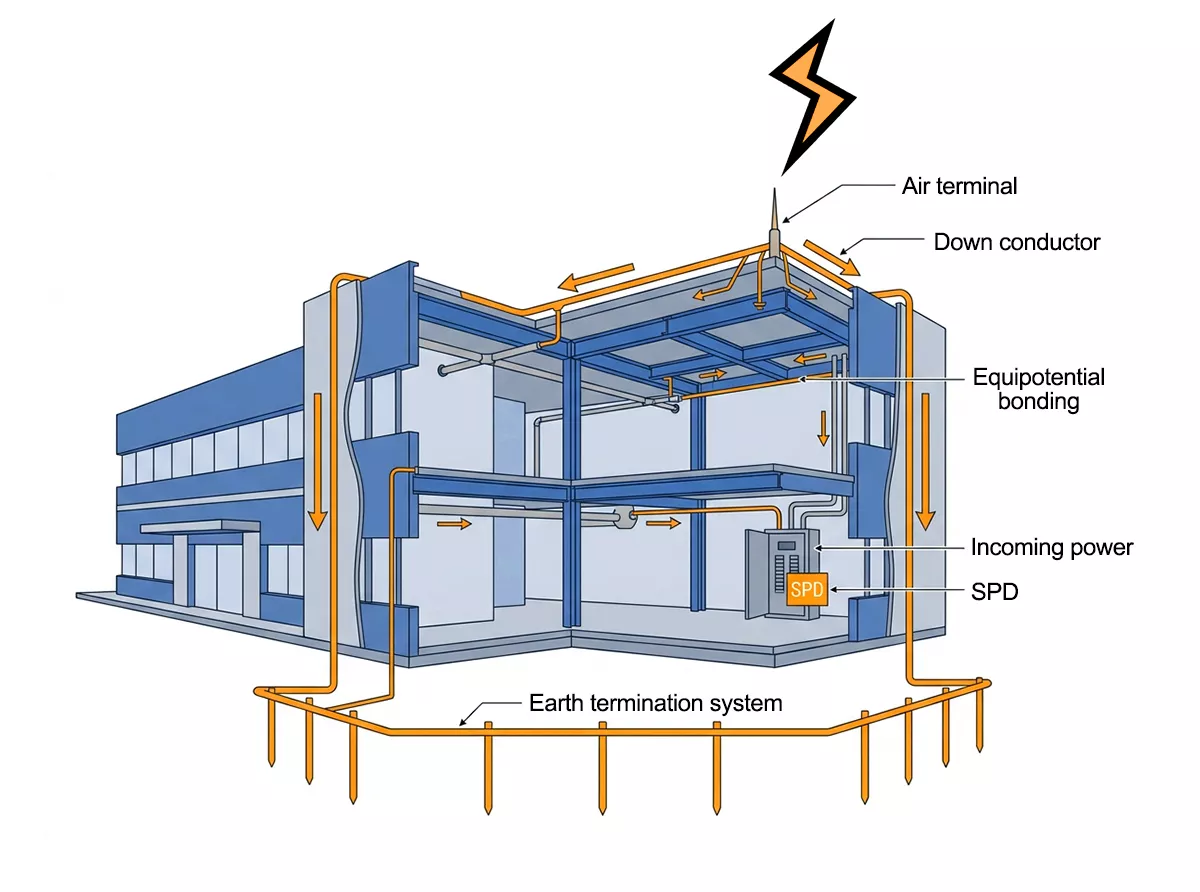
Figure 1 — Lightning current path from the rooftop air terminal through bonded down conductors to the earth termination system.
alt text: How does a lightning conductor work from air terminal to earth termination diagram
What parts make up a lightning protection system?
A complete lightning protection system combines external strike protection with measures that limit dangerous voltage inside the building. The rooftop conductor cannot work in isolation because every intercepted strike still needs a controlled route through the structure and into the soil.
Ask “how does a lightning conductor work?” and the practical answer has two halves: the rod intercepts the strike, while the rest of the LPS carries, bonds, and disperses the current.
| Component | Purpose | What can happen if it is missing or poorly installed |
| Air termination system | Intercepts a direct strike at a designed point using rods, conductors, mesh, or catenary wires | Lightning can attach to an unprotected roof edge, plant, or structural element |
| Down conductors | Carry lightning current from the roof to the earth termination system | Current can find unintended paths through steel, pipes, wiring, or building materials |
| Equipotential bonding | Limits voltage differences between the LPS and nearby conductive parts | Side flashes can cross air gaps and cause fire, shock, or equipment damage |
| Earth termination system | Spreads lightning current into the ground through electrodes and buried conductors | Ground potential can rise unevenly, increasing touch voltage, step voltage, and arcing risk |
| Surge protective devices | Clamp transient overvoltage on incoming power, data, and communication lines | Electrical and electronic equipment remains exposed even when the external LPS intercepts the strike correctly |
The first four components form the external current path and its bonding network. SPDs sit at the boundary between that external event and the electrical installation. For a full explanation of their electrical role, see what is an SPD .
The IEC 62305 series treats lightning protection as a system covering physical damage, risk, and electrical or electronic systems within a structure. That system view matters: adding a metal rod to a roof without checking the down path, bonding, and earth termination can introduce a new route for lightning current without controlling where the route goes.
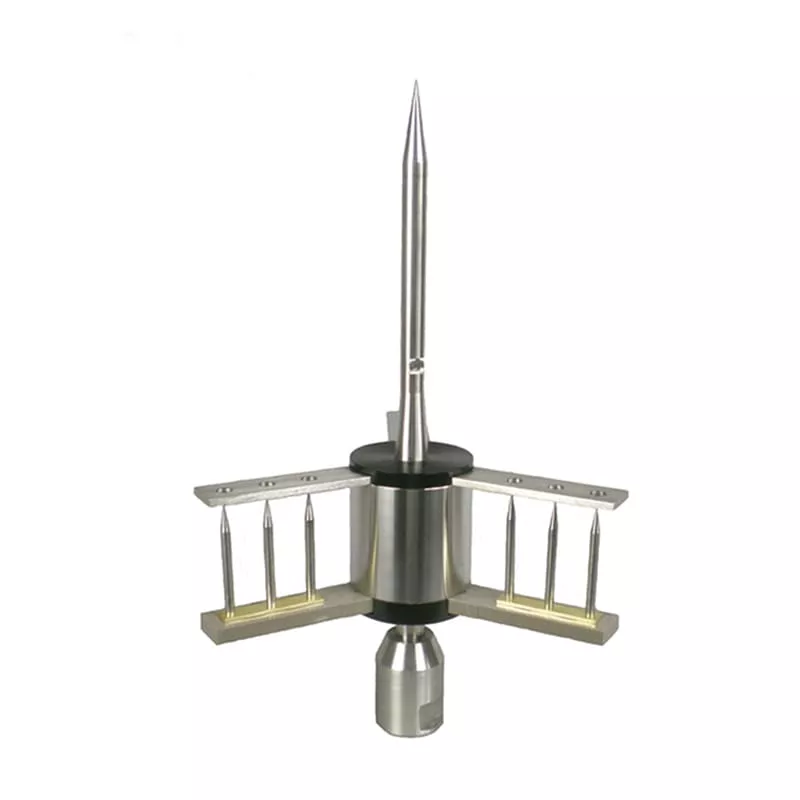
Figure 2 — Thor TRSB 3.3 lightning rod showing the air terminal body and mounting hardware.
Do lightning conductors attract lightning?
Lightning conductors do not attract thunderstorms or pull distant lightning toward a building. A strike develops through an electrical connection between a descending leader from the cloud and an upward leader from the ground. The air terminal is positioned so that, if an attachment occurs within the designed protection zone, the connection is more likely to finish at a point built to carry the current.
Calling the rod a “lightning magnet” hides the real engineering work. Protection depends on the location and spacing of the air terminals, the route of the down conductors, bonding to nearby metalwork, and the earth termination system. A poorly connected rod at the highest point of a roof is not automatically safe.
The opposite claim is also wrong: a pointed rod does not quietly drain a storm cloud and remove the chance of a strike. The rod’s main protective role becomes clear after attachment. From that moment, the LPS controls where the current enters the structure and how it reaches earth.
Figure 3 separates the protection zone from the storm itself. The air terminal changes where an attachment is controlled; it does not create the charged cloud or pull every nearby discharge toward the roof.
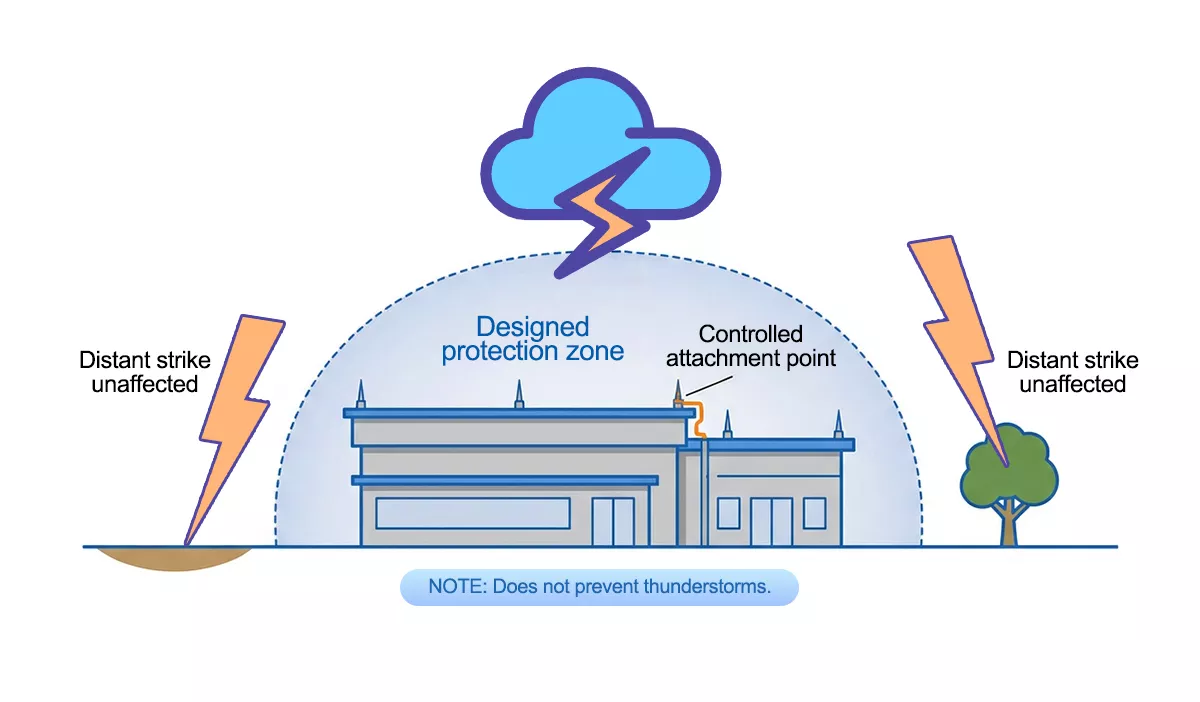
Figure 3 — A lightning conductor provides a controlled attachment point within the designed protection zone without attracting distant strikes.
What a lightning conductor cannot protect
A lightning conductor protects the structure against the physical effects of a direct strike within its designed protection zone. It does not, by itself, keep transient voltage out of the electrical installation.
Lightning can reach equipment without hitting the roof. A nearby strike can induce voltage in long cable runs, while a strike to a utility line can send a conducted surge through the service entrance. Power, Ethernet, CCTV, control, and antenna cables all create possible entry paths.
The rooftop conductor also cannot correct faults elsewhere in the LPS. Protection breaks down when metalwork is left unbonded, a down conductor is damaged, an earth connection has corroded, or later construction extends beyond the original protection zone. Inspection has to cover the current path, not just the rod that is easiest to see.
SPDs close the remaining gap at incoming services and distribution boundaries. The external LPS routes direct lightning current toward earth; correctly selected SPDs limit the voltage passed into electrical and electronic equipment. Buildings exposed to direct lightning often need both layers, coordinated as one design.
Lightning conductor vs surge protective device
A lightning conductor and an SPD solve different parts of the same problem. One manages the path of direct lightning current through the structure. The other limits transient voltage on a connected electrical circuit.
| Question | Lightning conductor | Surge protective device |
| What does it protect against? | Physical damage and fire risk from a direct strike to the protected structure | Transient overvoltage entering or developing on power and signal circuits |
| Where is it installed? | At roof level, along the down path, and at the earth termination network | At service entrances, distribution boards, equipment panels, and signal-line entry points |
| How is it connected? | In series with the intended lightning-current path from the air terminal to earth | In parallel between live conductors, neutral, protective earth, or signal conductors as required |
| What happens during an event? | The LPS intercepts the strike and routes current toward the earth termination system | The SPD changes to a low-impedance state and diverts surge current while limiting voltage across the protected circuit |
| Which standards apply? | IEC 62305 series for lightning protection of structures | IEC 61643 series for SPDs and their application |
| Can it replace the other device? | No. It does not clamp surges on incoming wiring | No. It does not replace air terminals, down conductors, bonding, or earth termination |
The distinction becomes especially important at a building fitted with an external LPS. A Type 1 SPD at the service entrance is designed for partial lightning current that reaches the electrical installation. Downstream Type 2 and Type 3 protection can then reduce the remaining transient voltage closer to sensitive loads. For panel-side connection examples, see our SPD wiring diagram .
Selection still depends on the supply system, installation point, prospective surge current, and coordination with upstream and downstream protection. “The building has a lightning rod” is not enough information to choose an SPD.
Figure 4 shows why both devices appear in one protection plan. The lightning conductor routes direct strike current toward earth, while the SPD limits a surge arriving through the incoming power line before it reaches connected equipment.
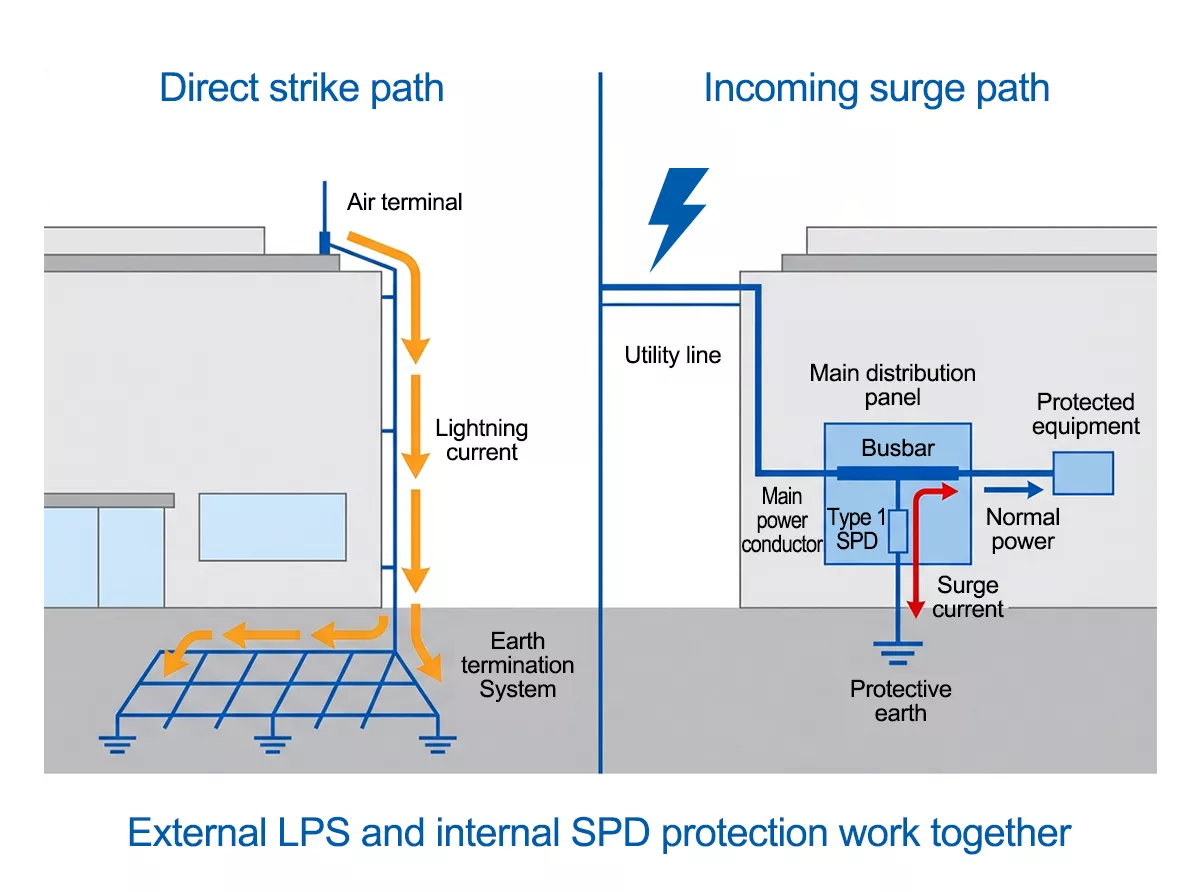
Figure 4 — Lightning conductor and SPD protect against different paths created by the same lightning event.
How materials, routing, and grounding affect performance
The same drawing can produce very different results on two buildings. Conductor material, joint quality, routing, bonding, and the earth network decide whether the installed system behaves like the design.
Use compatible conductor materials
Copper and aluminum both appear in lightning protection systems, but they cannot be mixed carelessly. Contact between dissimilar metals can accelerate galvanic corrosion, especially outdoors or in damp locations. The selected material also has to suit the roof covering, structural metal, fixings, and local environmental conditions.
Connections deserve as much attention as the conductor itself.
Loose clamps, painted contact surfaces, corrosion, and incompatible fittings add impedance or break continuity. Visual inspection alone does not prove that a joint can carry lightning current.
Keep the current path short and predictable
Down conductors should follow direct routes with gradual changes in direction. Long detours and tight bends increase inductive voltage during the steep rise of a lightning impulse. More than one down path can divide the current and reduce the stress concentrated on a single route, provided the paths form part of the same bonded design.
Later building work often creates the hidden problem. New HVAC units, solar frames, cable trays, antennas, or metal façades can reduce separation distances or sit outside the original protection zone. An LPS should be reviewed when the roof layout changes, not only after a strike.
Design the earth termination as a network
An earth electrode is not a drain that makes current disappear at one point. Lightning current spreads through the soil, raising the local ground potential as it goes. Electrode spacing, buried conductor length, soil resistivity, moisture, and interconnection with other earthing systems shape that voltage distribution.
A very low resistance reading does not excuse poor bonding or a bad down-conductor route. Lightning is a fast impulse, so the complete path’s impedance matters. Testing should check continuity, connections, corrosion, and changes to the building as well as the measured earth resistance.
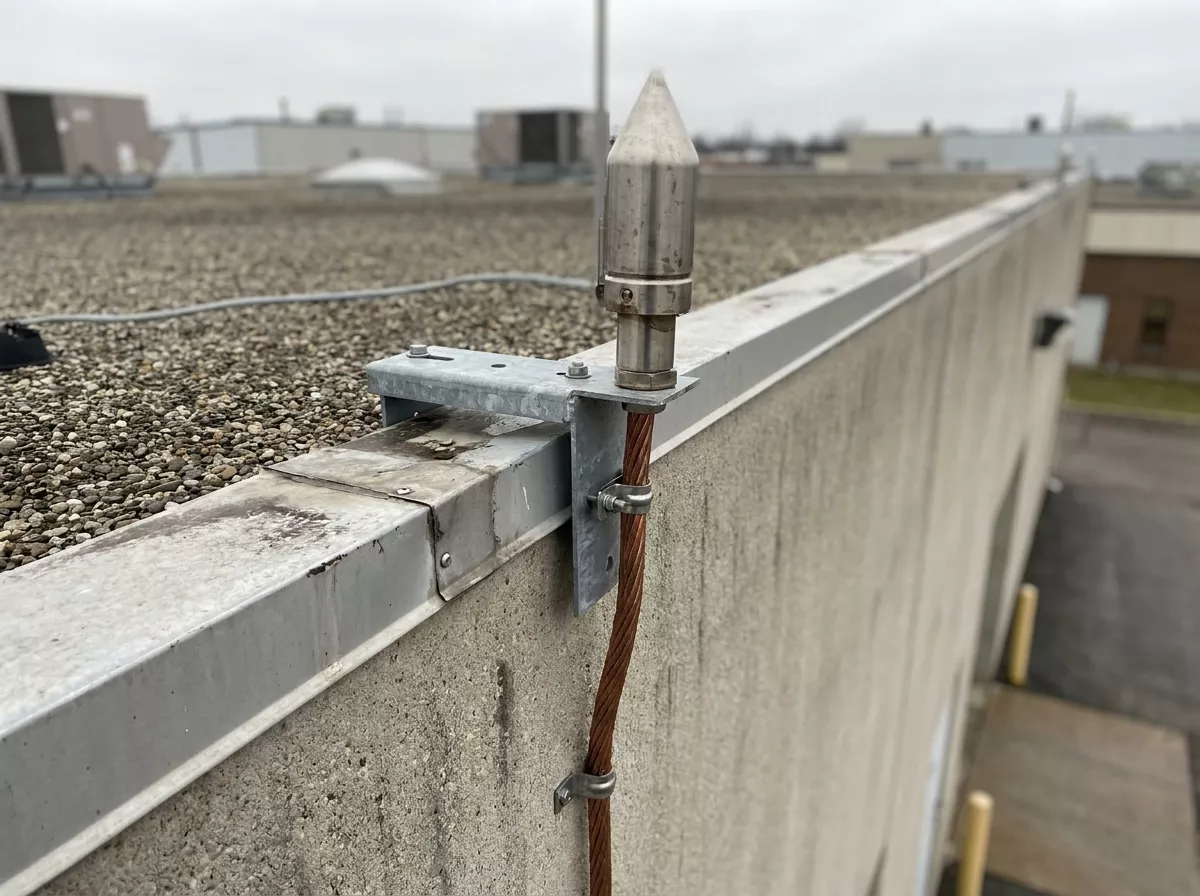
Figure 5 — Representative rooftop lightning-protection installation showing the air terminal, mounting point, and visible down-conductor route.
FAQ
How does a lightning conductor work in simple terms?
A lightning conductor intercepts a strike at a designed point and carries the current through down conductors to an earth termination system. Bonding reduces dangerous voltage differences between nearby metal parts. The system controls the current’s route; it does not stop lightning from forming.
Are lightning conductors always effective?
No lightning protection system guarantees that a building will suffer no damage. Performance depends on the protection-zone design, conductor routing, bonding, earth termination, installation quality, and maintenance. A rod without a complete current path is not a complete LPS.
What happens when lightning hits a conductor?
The current travels from the air terminal into the down-conductor network and then into the earth termination system. Voltage rises across the whole path during the impulse, which is why short routing, multiple bonded paths, and separation from unbonded metalwork matter.
Which metal is used in lightning conductors?
Copper and aluminum are common conductor materials. The correct choice depends on the roof, structural materials, corrosion exposure, and compatible fittings. Dissimilar metals should not be joined without a connection method designed to control galvanic corrosion.
Does a lightning conductor protect electrical equipment?
Not by itself. A lightning conductor manages a direct strike to the structure, while SPDs limit transient overvoltage on incoming power and signal lines. Sensitive equipment needs an SPD layout matched to the electrical system and exposure level.
Do I need a lightning rod on my house?
The answer depends on lightning exposure, building height and location, construction, occupancy, connected services, and the consequences of damage. A risk assessment under the applicable lightning protection standard is more reliable than choosing from roof height alone.
Thor Electric SPDs for complete lightning protection
Thor Electric manufactures Type 1, Type 2, and Type 1+2 SPDs for AC, DC, PV, and signal-line applications under the relevant IEC 61643 standards. In a building with an external LPS, a Type 1 SPD at the service entrance can divert partial lightning current that reaches the electrical installation, with downstream stages selected for the remaining exposure. Samples, custom voltage ratings, and OEM configurations are available for project evaluation. Contact Thor Electric with the supply system, voltage, installation point, and required protection level.