
Is surge protection necessary? For an IEC-based installation, the answer comes from the national standard in force for the project and the conditions of the installation. Check the supply and lightning exposure, earthing arrangement, connected equipment and consequences of failure. If the applicable standard requires an SPD, fit one. If it permits an assessment or documented omission, follow those conditions.
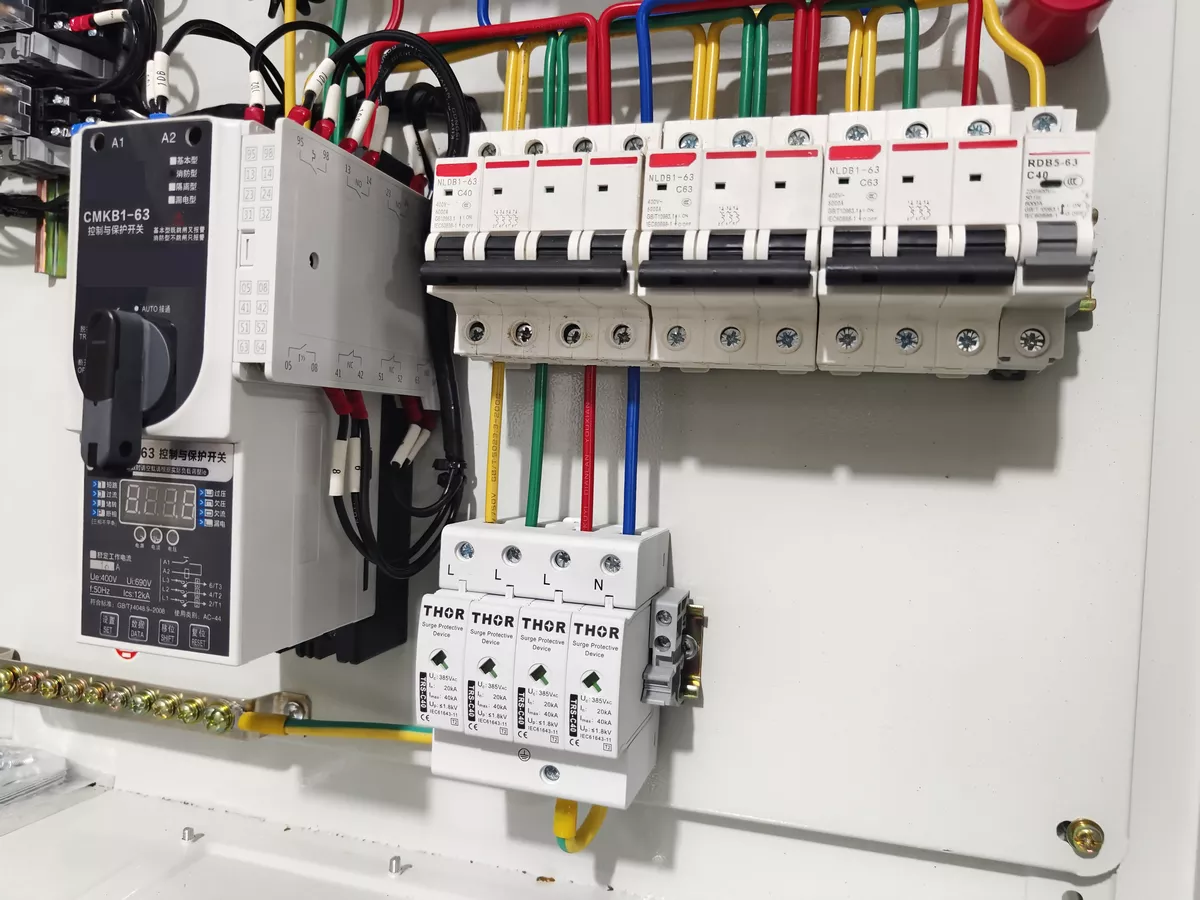
Figure 1 — THOR surge protective device installed on a DIN rail inside a distribution board.
IEC 60364 establishes the general framework, but each country adopts it through its own national standard. Requirements, exceptions and records can therefore differ by jurisdiction.
Is surge protection necessary? The short answer
Surge protection is often required when equipment failure could affect safety, public services, commercial activity or data. The applicable national standard states when an SPD is mandatory, when an assessment is required and when omission is allowed. Confirm the current edition before completing the design.
Three factors determine the requirement for a specific project.
The consequence of failure is the first factor. Loss of a fire alarm panel, process data or machine control can affect safety and operations beyond the cost of the damaged component. The protection decision therefore considers the result of equipment failure as well as the probability of a surge.
Exposure includes overhead supplies, rural feeders, a structure with a lightning protection system and the switching of large inductive loads. Connected equipment also matters. EV charge points, heat pumps and inverters contain power electronics that can be damaged by transient overvoltage.
For a standard low-voltage AC supply without a lightning protection system or assessed direct-lightning-current exposure, a Type 2 AC surge protection device is commonly installed at the origin. Where direct lightning current must be considered, the design may require Type 1 or a combined Type 1+2 device. Final selection must follow the applicable national standard and Clause 534.
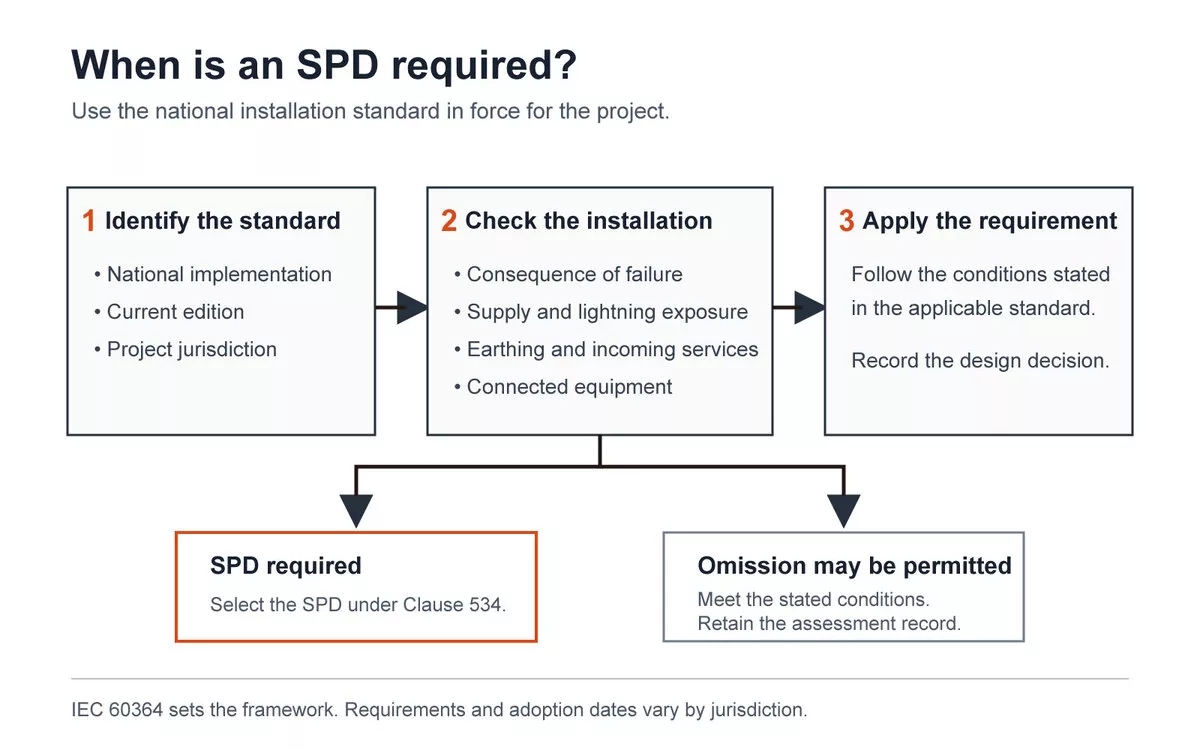
Figure 2 — Check the applicable national standard, assess the installation and record whether an SPD is required.
What the standards actually require
IEC 60364-4-44, Clause 443 covers the requirement for protection against transient overvoltage. The current edition is IEC 60364-4-44:2024, published in December 2024 as Edition 3.0. It replaced the 2007 edition and its 2015 and 2018 amendments. IEC’s revision summary states that Clause 443 was amended to introduce DC SPD requirements more clearly.
Clause 443 determines whether protection is required. IEC 60364-5-53, Clause 534 covers SPD selection and installation. IEC 61643-11 covers requirements and tests for low-voltage SPDs. A specification should distinguish these three roles.
The IEC web page does not reproduce the full clause text, and national implementations can use different thresholds, exemptions and records. BS 7671 in the UK, NF C 15-100 in France, VDE 0100 in Germany and SANS 10142 in South Africa must each be checked in the edition that applies to the project. Criteria and calculation methods copied from an older edition may no longer apply. Verify figures from secondary summaries against the standard in force.
No single date made surge protection mandatory in every country. Each jurisdiction adopts or amends its installation standard on its own schedule. The project must comply with the edition in force in the jurisdiction where the installation is built or altered.
SPD requirements apply to the installation and its protection scheme. They do not mean that every new circuit needs a separate SPD. Protection normally starts at the origin and is coordinated downstream where the design requires it. An older installation is not automatically non-compliant because a newer edition exists. Additions, alterations, inspections and upgrade duties remain subject to the applicable national standard and legislation.
What actually happens without one
A transient overvoltage is a short voltage peak with a fast rising edge. On a low-voltage network it can reach several thousand volts and last less than a millisecond. Common sources include lightning-induced surges on overhead lines and the switching of inductive or capacitive equipment. A direct strike to the structure is not required.
A high-energy event can cause immediate insulation breakdown or component failure. Repeated lower-energy events can degrade power supplies and control boards. Failure may occur later, so maintenance records do not always identify transient overvoltage as the original cause.
An SPD limits the voltage reaching equipment and diverts surge current into the earthing system. Effective protection depends on low-impedance earthing and bonding. Defects in the earthing system must be corrected as part of the installation work.
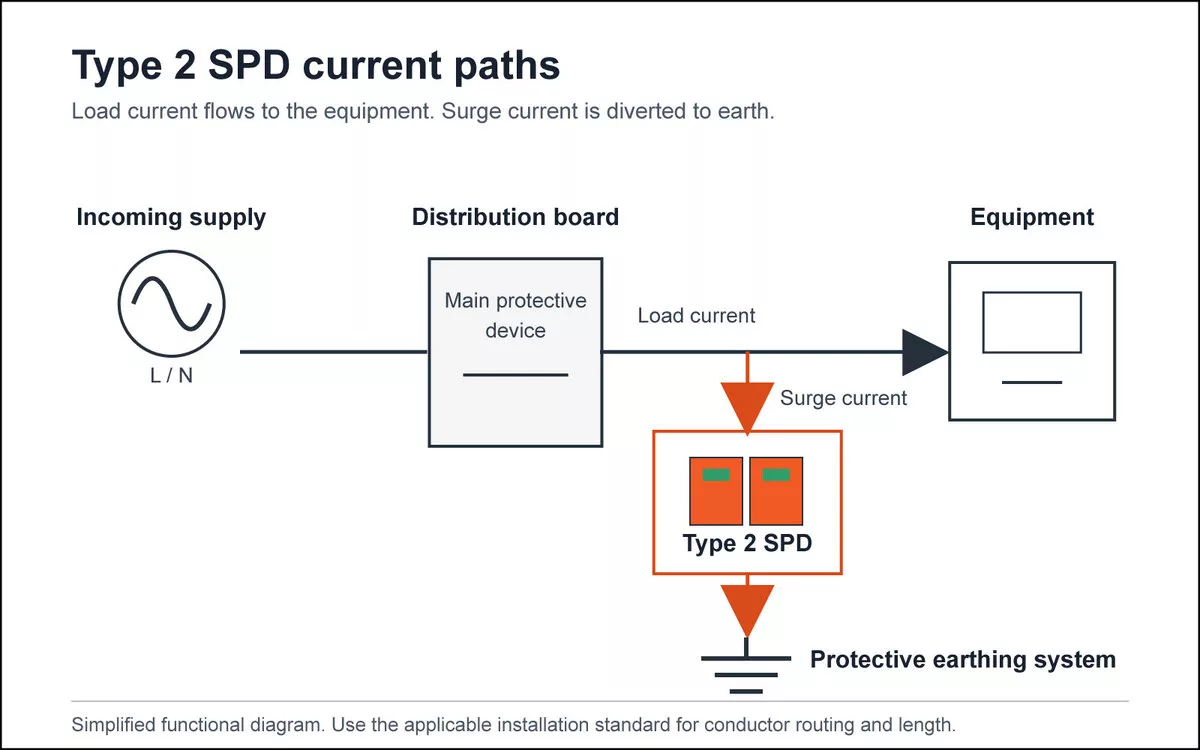
Figure 3 — Normal load current versus a surge event: the SPD limits the voltage across the load and diverts surge current into the earthing system.
What an SPD does not cover
A board-level SPD does not replace overcurrent, residual-current or lightning protection. It also does not protect every conductive service entering a building. The table separates these functions.
| Device or system | What it does | Does it limit a transient? |
| Circuit breaker (MCB/MCCB) | Interrupts overcurrent and short circuits | No. Far too slow for a microsecond event |
| RCD / RCBO | Detects earth leakage for shock protection | No. A different fault entirely |
| UPS | Rides through outages and sags, conditions supply | Only within its own rating; no substitute for a board-level SPD |
| Lightning protection system | Conducts direct strike current to earth | No. It protects the structure; the SPD protects the circuits |
| Earthing and bonding | Gives surge current a low-impedance path | It is what makes an SPD work, not an alternative to one |
A surge can also enter through a telephone line, cable TV network or another conductive service. These paths require separate protection selected for the interface. Examples include Ethernet and PoE cables between buildings, RS485 and control wiring, and coaxial feeds from an external antenna.
The required devices depend on the conductive services that enter the site. A power SPD at the distribution board does not protect an inter-building data cable. Ethernet and PoE surge protection therefore requires a separate selection check.
The decision, in one table
Use the following factors to record the decision for a specific project. The right-hand column lists the installation cost or limitation associated with each factor.
| Factor | Points toward fitting an SPD | Cost or caveat |
| Consequence of failure | Safety-critical functions, public infrastructure and operations where downtime has serious consequences | Check whether the applicable national rule makes protection mandatory; do not import another country’s criteria |
| Value of connected equipment and data | Inverters, EV charge points, BMS and control systems, servers, process instrumentation | Device and enclosure cost, plus board space a retrofit may not have |
| Lightning exposure | Overhead supply, exposed or rural site, structure with an LPS, high ground flash density | An LPS pushes you to Type 1 at the origin, a larger and costlier device |
| Internal switching sources | Motors, drives, compressors, capacitor banks | Protection must be coordinated across stages, not dropped in at the origin alone |
| Multiple entry paths | Data, signal or coaxial services entering the building | Each path is a separate device and a separate decision |
| Existing installation, no alteration | Not automatically non-compliant; the rules are not retrospective | Retrofitting later means finding board space and an upstream protective device |
| Omission permitted by the applicable standard | Some national implementations allow a documented route for omission | Verify the current edition, who may make the decision and what record it requires |
Long connecting leads add voltage to the protective level seen by the equipment. Keep the leads short and follow Clause 534. An SPD is also a wear component. Its status indicator must be checked during inspection, and a failed plug-in module must be replaced.
What to send us when the answer is yes
When an SPD is required, record the nominal voltage, phase arrangement, earthing arrangement, lightning protection system, installation point, upstream overcurrent device and incoming data services. Type 1 vs Type 2 vs Type 3 SPD explains the selection logic. Send these details to our team.
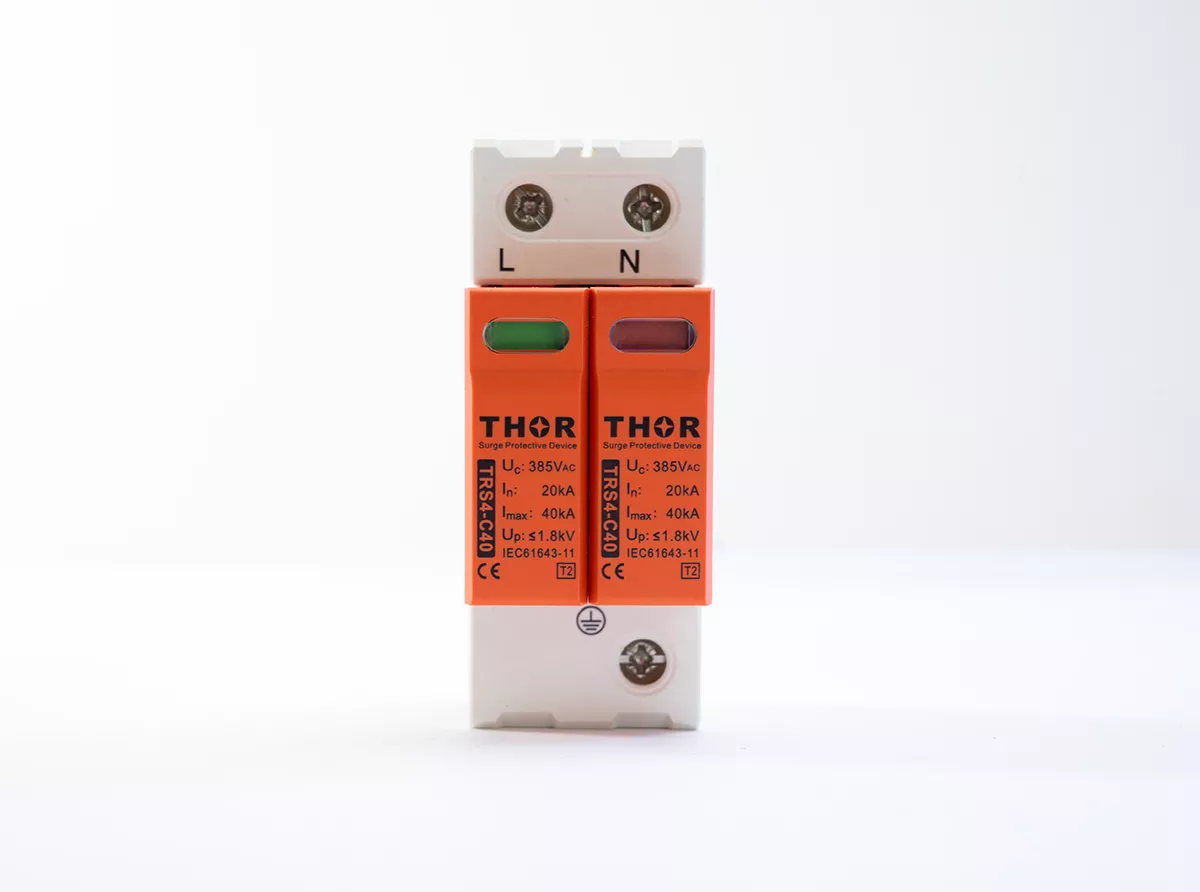
Figure 4 — Thor TRS4-C40 Type 2 SPD showing green normal and red end-of-life indicator states.