
Sourcing an SPD supplier is not like buying cable or breakers. The wrong choice shows up late — a certificate that doesn’t hold up on a project audit, a datasheet that overstates discharge capacity, a supplier who stops responding after the first shipment. By the time you find out, the panels are installed.
So what separates a supplier you can rely on from one you’ll regret? It comes down to six areas — starting with the documents they’d rather you didn’t check.
Start with Certifications — and Verify Them
To choose an SPD manufacturer, verify IEC 61643-11 certification at model level, confirm CE and RoHS marks for European projects, and check whether the supplier holds independent TUV certification. Ask for the specific certificate number — not a family document — and verify it directly on the issuing body’s website. Suppliers who cannot produce a verifiable certificate number should be removed from your shortlist.
IEC 61643-11 is the baseline international standard for low-voltage surge protective devices. No certificate, no further conversation.
CE and RoHS marks are non-negotiable for projects in Europe and most export markets. A supplier who can’t produce these on request is either selling into markets where they don’t apply or hoping you won’t ask.
TUV certification sits above the rest. Unlike self-declared conformity, TUV testing is conducted by an independent laboratory — the manufacturer can’t set their own pass criteria. Not every SPD supplier carries it. Thor Electric’s TRS30B+C holds TUV certification alongside IEC, CE, RoHS, CB and ISO.
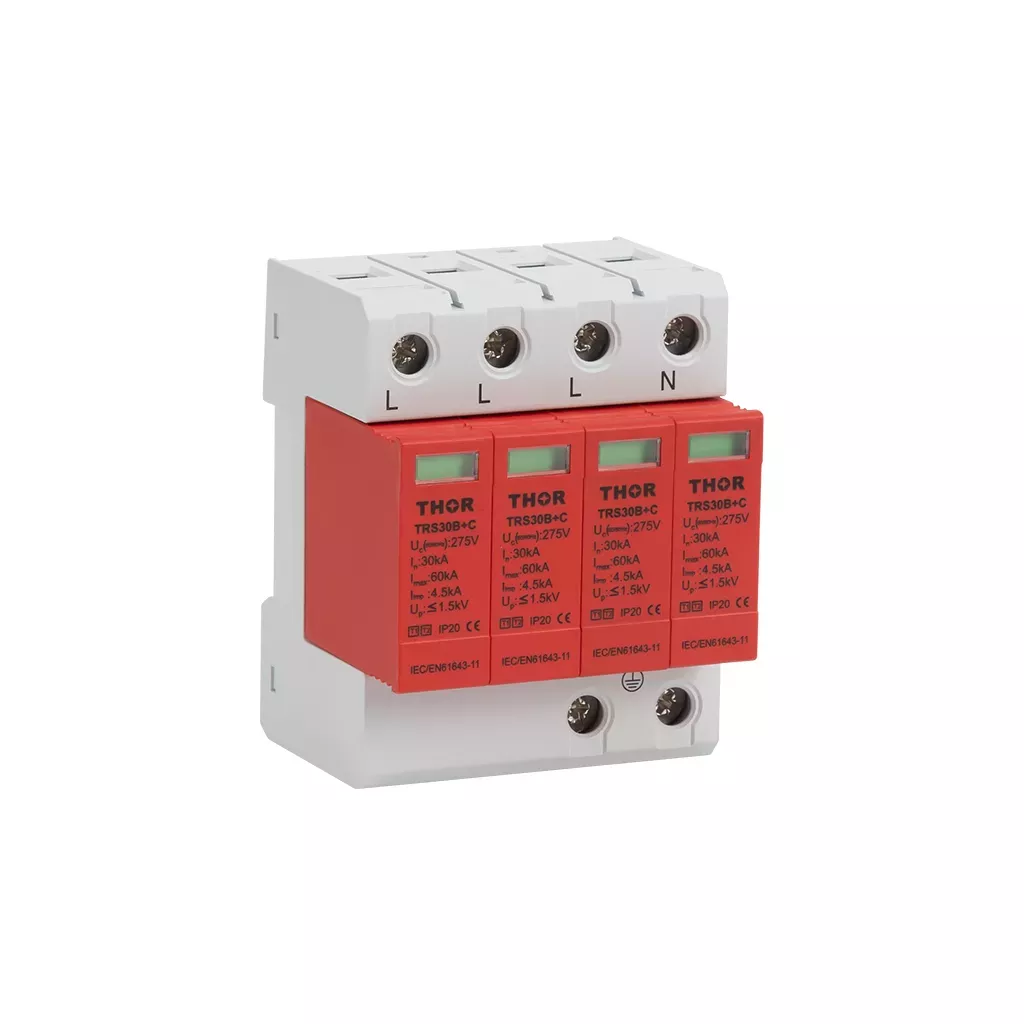
Figure 1: Thor Electric TRS30B+C Type 1+2 SPD, TUV certified to IEC 61643-11.
One detail that catches buyers out: always request model-level certificates. Some suppliers present a family approval document that covers a broad product range but was tested on a single reference unit. Ask for the certificate number, then verify it directly on the issuing body’s website. TUV Rheinland certificates are searchable at certipedia.com . If the supplier hesitates, that’s your answer.
Read the Datasheet Like an Engineer
A datasheet tells you more about a supplier than their sales team ever will. The parameters on the page — and the ones missing from it — are the clearest signal of how seriously a manufacturer takes their product.
For any AC SPD, a complete datasheet should list all of the following: Uc (maximum continuous operating voltage), Up (voltage protection level), In (nominal discharge current), Imax (maximum discharge current), and response time. For Type 1 devices, Iimp (impulse current, 10/350µs waveform) is mandatory. For PV SPDs, add Ucpv and Iscpv.
A pattern worth watching: some vendors list Imax prominently on the front page and bury In — or leave it out entirely. Imax is the peak the device can survive once under laboratory conditions. In is the rated discharge current the device handles repeatedly in service. They are not the same number, and a supplier who leads with Imax while omitting In is telling you something. The same applies to Up: a vague range like “≤2.5kV” on a Type 2 device should prompt follow-up questions.
Cross-reference what you’re given against IEC 61643-11 parameter definitions. If a supplier’s datasheet doesn’t map cleanly to the standard’s terminology, ask them to explain the gap. Suppliers with nothing to hide answer that question quickly.
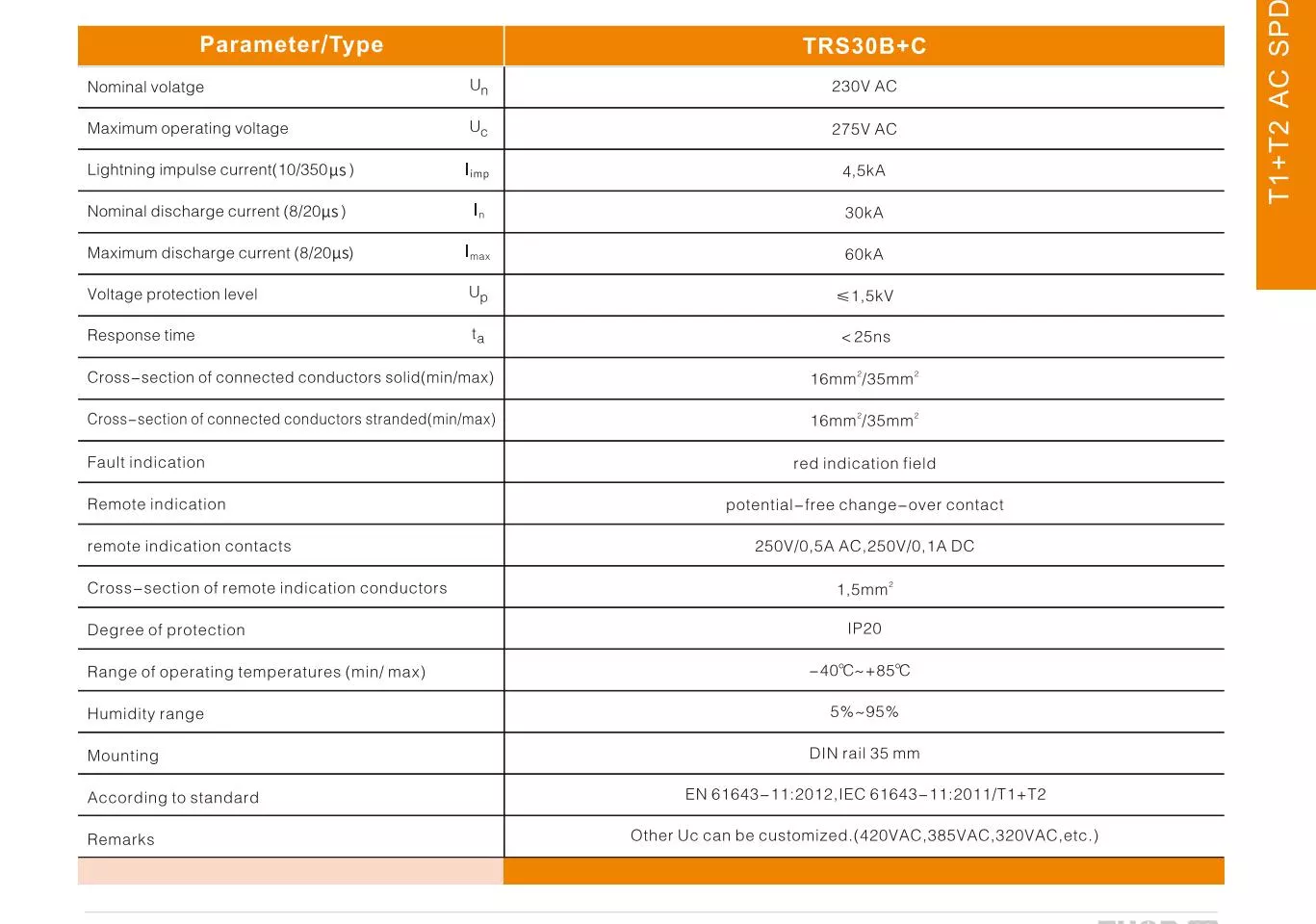
Figure 2: TRS30B+C datasheet parameter table showing Iimp, In, Imax, Up, Uc and response time — all fields a compliant SPD supplier should provide.
Check Whether One Supplier Can Cover Your Whole Project
Most projects need more than one SPD type. A commercial building might need Type 2 AC protection at the distribution board, DC SPDs at the solar inverter, and signal line protection on the CCTV network. If each comes from a different supplier, you’re managing three datasheets, three lead times, and three points of failure when something goes wrong.
A manufacturer with a full product range — AC, DC, PV, and signal line — cuts that down to one. Coordination between protection stages is cleaner when the devices come from a single source with consistent specifications.
Before shortlisting a supplier, confirm they stock all the types your project requires: Type 1 and Type 2 AC SPDs, PV Type 1+2 for solar applications, and signal line protection for Ethernet, RS485, or coaxial interfaces if needed. A supplier who covers AC only is a single-product vendor, not a project partner.
Modular Design Cuts Long-Term Maintenance Costs
An SPD doesn’t last forever. MOV-based devices degrade with each surge event, and eventually the protection module needs replacing. How easy that replacement is depends entirely on how the device was designed.
Plug-in modular SPDs separate the protection module from the base unit. When the module reaches end of life, a technician swaps it out on-site — no rewiring, no panel shutdown, no downtime beyond the time it takes to pull one module and push in another. The base stays wired. Work takes minutes.
Fixed, non-modular designs don’t work that way. The whole unit comes out. That means disconnecting live wiring, potentially taking a circuit offline, and reinstalling from scratch. In an industrial panel with tight cable management, that’s an hour of work minimum. In a remote installation, it’s a site visit.
Over a ten-year installation life, the difference adds up. Ask any supplier whether their SPDs use plug-in modules or fixed construction. The answer is in the datasheet — look for “pluggable module” or “replaceable cartridge” in the product description. If it’s not mentioned, assume fixed.
Thor Electric’s DIN-rail SPD range uses plug-in modular construction across AC, DC, and PV lines. The protection module pulls out without tools and without touching the wiring. For more on how MOV-based modules degrade over time, the SPD aging and replacement article covers the failure mechanisms in detail.
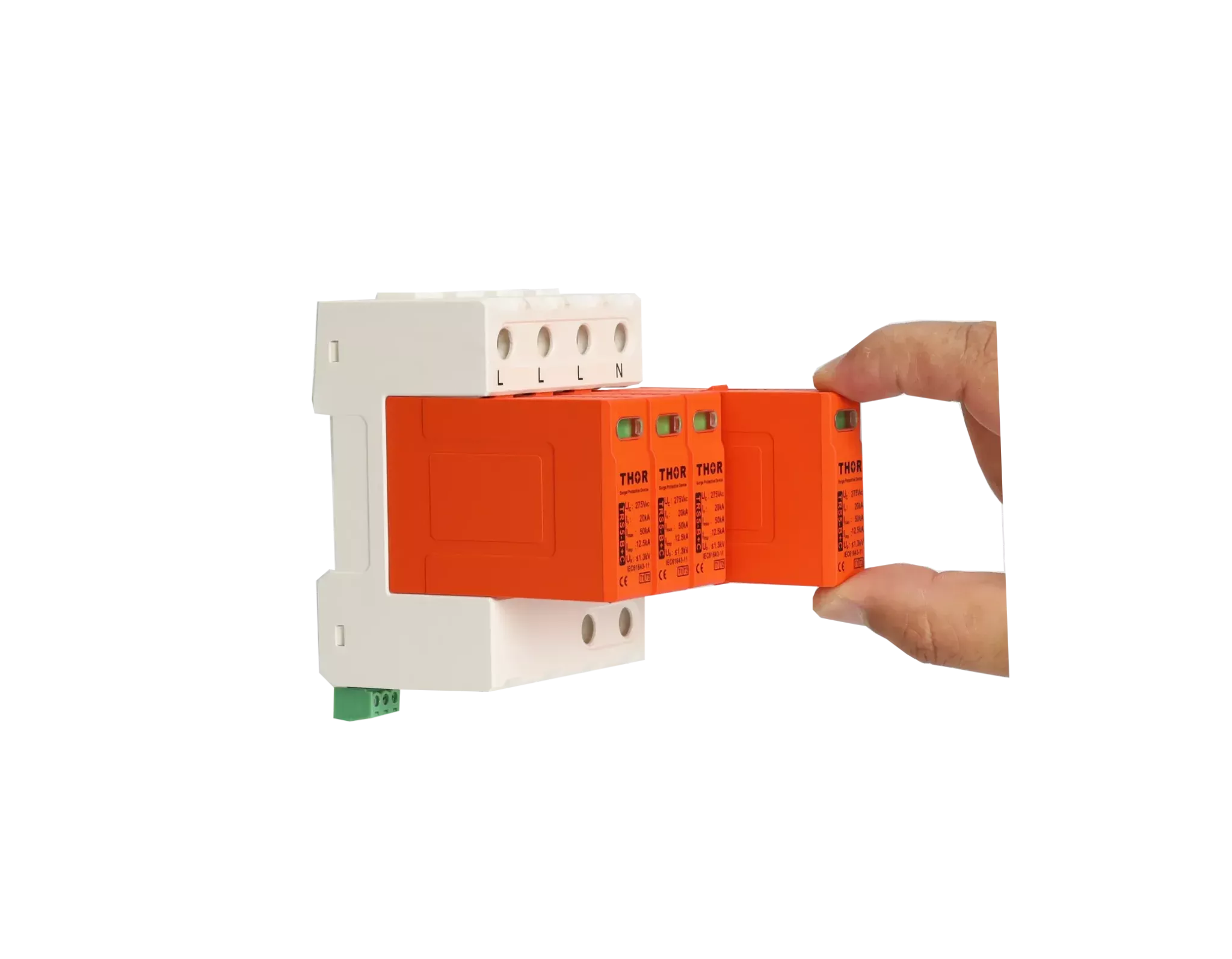
Figure 3: Thor Electric plug-in modular SPD showing removable protection module and base unit.
OEM and Customization: More Relevant Than Most Buyers Realize
Standard catalogue products work for projects where the spec is fixed. For everything else — regional grid voltage variations, distributor private-label requirements, project specs that call for a non-standard Uc — a supplier without OEM capability leaves you with limited options.
The most common customization request is Uc adjustment. Standard AC SPDs typically ship at 275V AC, but projects on higher-tolerance grids or 400V three-phase systems may need 320V, 385V, or 420V variants. A manufacturer who can only supply fixed catalogue voltages forces you to either overspec the protection level or find a second source.
Distributors and system integrators often need private-label products — same device, different nameplate. That requires a manufacturer with in-house production control and a clear NDA process. Ask early: some suppliers support OEM in name but add six weeks to lead time and a minimum order quantity that makes small runs unworkable.
Before committing to a supplier, get answers to three questions: What Uc variants can you produce, and what’s the MOQ for a custom voltage? Can you support private-label, and what’s the process? What’s the lead time on a non-standard order versus a catalogue item?
What Should an SPD Cost
Price is part of supplier evaluation — but unit price alone is not a reliable signal. A Type 2 AC SPD from a certified manufacturer typically falls in the $35–85 per unit range at moderate volumes. Quotes significantly below that usually mean one of two things: uncertified product, or a trading company adding margin without adding value.
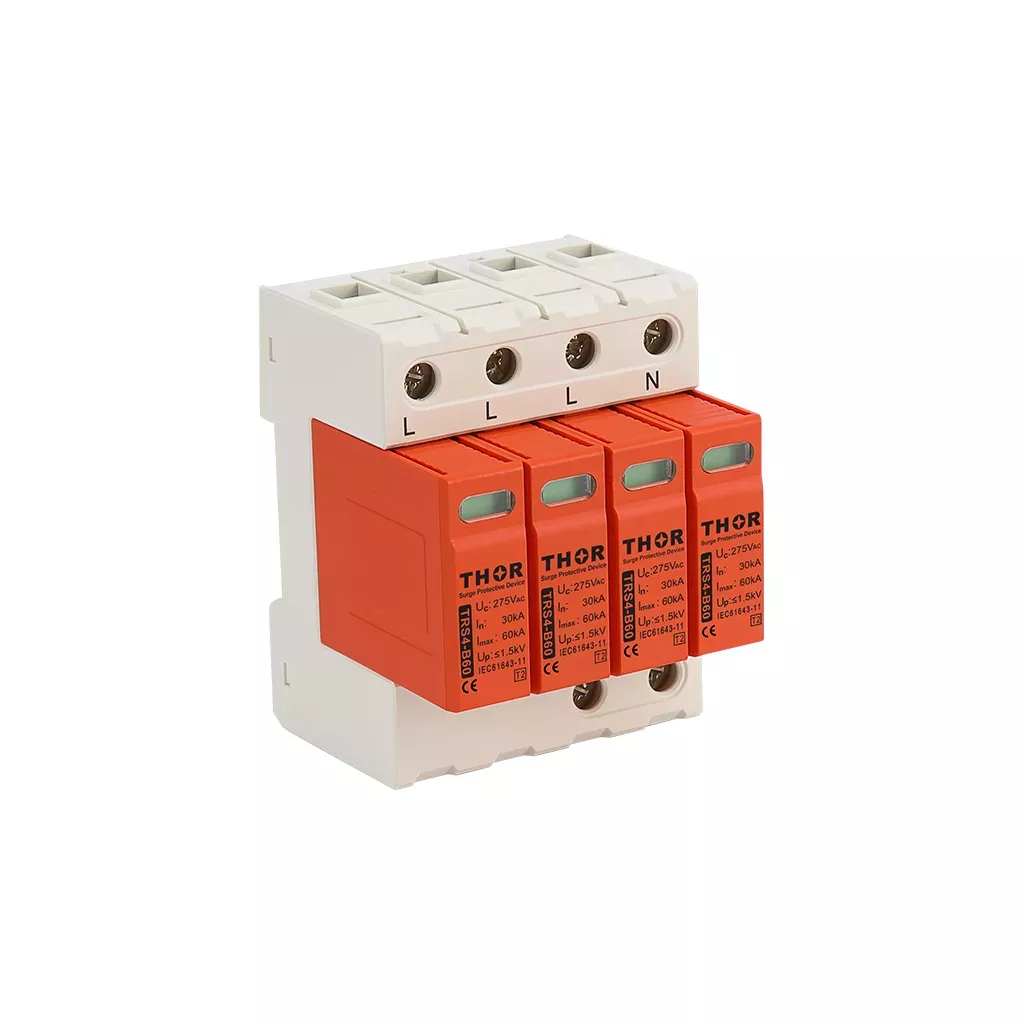
Figure 4: Thor Electric TRS-B60 Type 2 AC SPD — IEC 61643-11 certified, suitable for distribution board installation in commercial and industrial projects.
The more useful comparison is total cost over a five-year horizon. A modular SPD at a higher unit price costs less to maintain than a fixed unit that requires full replacement and panel downtime every time a module fails. Factor in installation labour and site visit costs before deciding that the cheaper unit wins.
Ask any supplier for a landed price — unit cost, packaging, freight, and any import duties for your market. A manufacturer who quotes ex-works only and leaves logistics to you is not the same as one who can confirm DDP pricing to your country. For B2B procurement at volume, this difference is material.
Samples and Lead Time: The Final Filter
A supplier who won’t send samples before a bulk order is a supplier who isn’t confident in their own product. That’s the short version.
Sampling is the only reliable way to verify that what’s on the datasheet matches what comes off the production line. Request at least two to three units of each model you plan to order. Test against the rated parameters, check the build quality, confirm the status indicator works, and verify the plug-in module seats and releases cleanly. Any supplier worth working with expects this request and turns it around within two weeks.
Lead time on standard catalogue items should be easy to answer. If a supplier hesitates or gives a wide range — “four to eight weeks, depending” — ask what’s driving the uncertainty. A manufacturer with real stock and production capacity knows their lead times. Vague answers usually mean reliance on third-party components or inconsistent production scheduling.
For custom orders, lead time extends. A reasonable benchmark: two to four weeks for sample production on a custom Uc variant, eight to twelve weeks for bulk. If a supplier quotes significantly longer without explanation, ask whether the customization requires new tooling or just a component swap — the answer tells you how flexible their production actually is.
FAQ
How do I choose an SPD manufacturer and verify their certifications are genuine?
Ask for the certificate number for the specific model you’re buying — not a family document — and check it directly on the issuing body’s website. TUV Rheinland certificates are searchable at certipedia.com by certificate number. IEC test reports reference the exact model tested and are issued by accredited laboratories. If a supplier can’t provide a verifiable certificate number within 24 hours, treat the certification claim as unconfirmed.
How do I spot a fake IEC certificate?
Four signals: the certificate lists a product family rather than a specific model number; the issuing laboratory is not accredited by a national body (CNAS, DAkkS, UKAS); the certificate number returns no results when searched on the laboratory’s website; or the document lacks a specific test date and scope. Legitimate certificates always state the exact standard version tested (e.g. IEC 61643-11:2011), the test laboratory’s accreditation number, and the certificate’s expiry date.
What’s the difference between Type 1, Type 2, and Type 3 SPDs?
The classification is based on installation position and the surge energy each device handles, not quality. Type 1 is installed at the service entrance where direct lightning strike current can flow; Type 2 goes at the distribution board for conducted and induced surges; Type 3 provides point-of-use protection close to sensitive equipment. The full breakdown is in the Type 1 vs Type 2 vs Type 3 SPD .
Can one SPD manufacturer cover both AC and DC applications?
Yes, though not all do. A full-range manufacturer stocks Type 1, Type 2, and Type 3 SPDs for AC systems, DC SPDs for battery and EV charging applications, PV SPDs for solar installations, and signal line protection for Ethernet and RS485. Sourcing from a single supplier with matched Up coordination across types simplifies procurement and reduces the risk of protection gaps between stages.
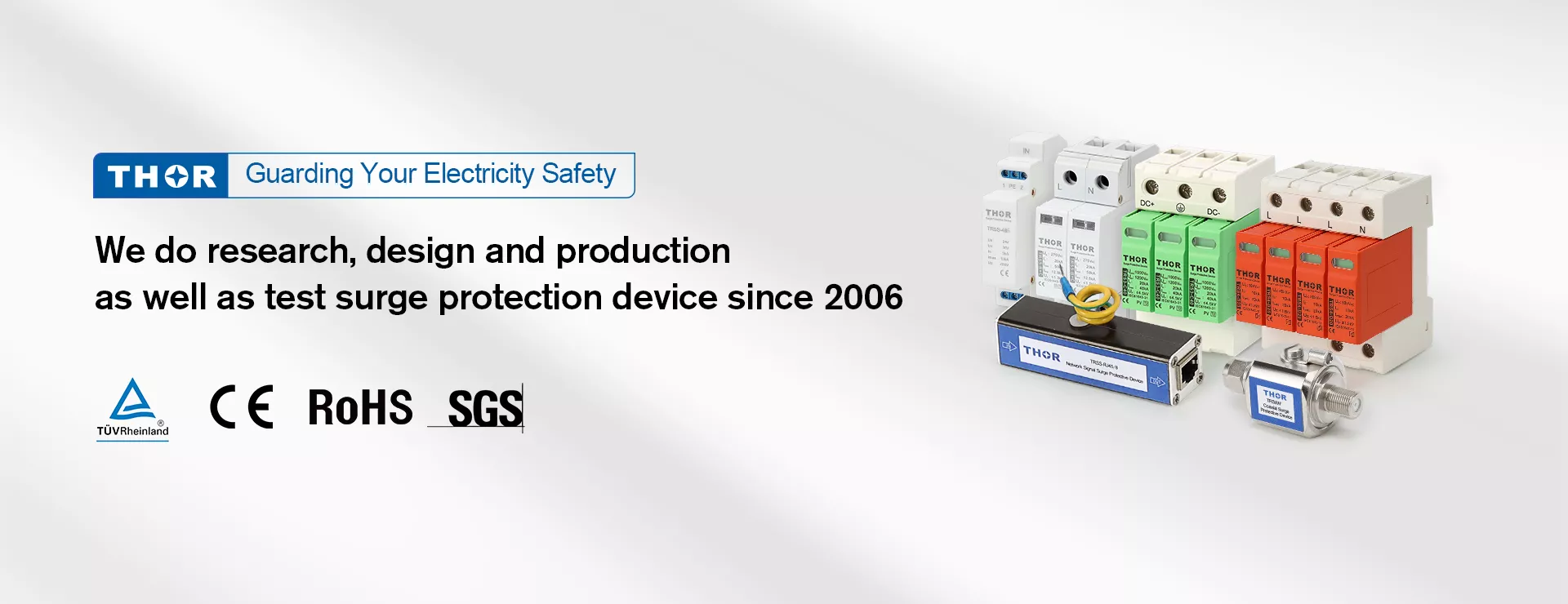
Figure 5: Thor Electric SPD product range — AC Type 1 and Type 2, DC, PV, and signal line surge protection devices, all IEC certified.
Discuss Your Project Requirements
Thor Electric manufactures IEC, TUV, CE, RoHS, CB and ISO certified SPDs across AC, DC, PV, and signal line applications. Samples ship on request before bulk commitment. Custom Uc variants available across AC and PV lines. OEM and private-label orders supported. Contact our team to get started.