
An SPD and a circuit breaker sit side by side on the same DIN rail, but they respond to completely different threats. The circuit breaker trips on overcurrent — too many amps flowing through the wire. The SPD clamps transient overvoltage — a voltage spike lasting microseconds that the breaker never even detects. Install only a breaker, and a 6 kV lightning-induced surge passes straight through to the equipment behind it. Install only an SPD, and a short-circuit fault current has no device to interrupt it.
An SPD installation needs coordinated short-circuit protection. Depending on the installation and the manufacturer’s instructions, that protection may be provided by the upstream protective device or by a separate backup MCB or fuse with a suitable interrupting rating. Add an RCD where earth-leakage protection is required, and the three devices then cover separate fault types: overcurrent, transient overvoltage and shock hazard.
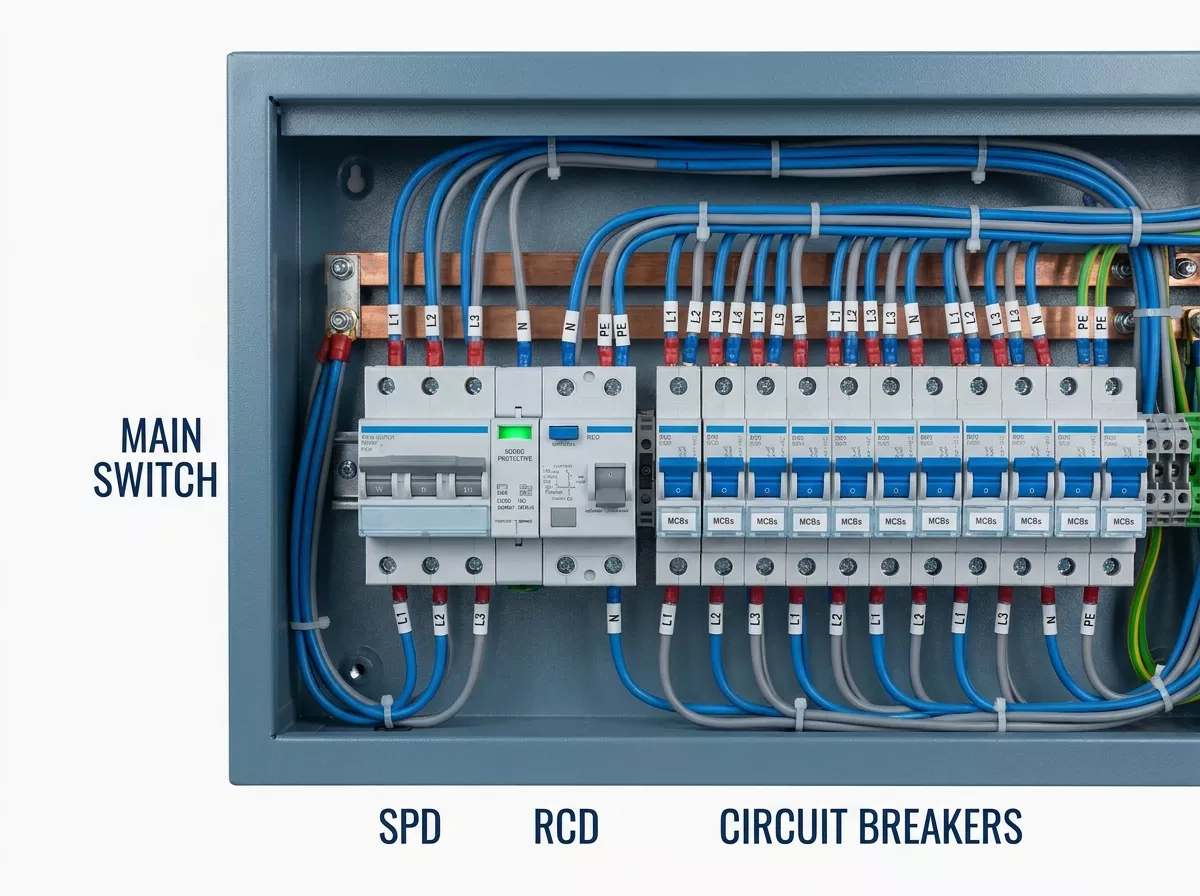
Figure 1 — Industrial distribution board with MCB, SPD and RCD mounted on DIN rail
What a Circuit Breaker Does — and What It Cannot
A circuit breaker interrupts overcurrent — too many amps flowing through a wire — using thermal and magnetic trip mechanisms. An SPD clamps transient overvoltage in nanoseconds by diverting surge current to earth. Neither device does the other’s job: a breaker cannot detect a microsecond voltage spike, and an SPD cannot interrupt sustained fault current. Both belong in every protected panel.
A miniature circuit breaker (MCB) monitors current flow continuously. When current exceeds the rated threshold — say a 32 A MCB seeing 50 A from an overloaded circuit — two mechanisms respond. The bimetallic thermal element heats and bends under sustained overload, tripping the breaker in seconds to minutes depending on severity. For a dead short circuit pulling hundreds of amps, the electromagnetic coil trips within half a cycle — under 10 ms at 50 Hz.
That combination protects cables from overheating and prevents electrical fires. Nothing more.
A lightning-induced surge arrives as a 1.2/50 µs voltage impulse paired with an 8/20 µs current impulse. The voltage spike peaks in 1.2 microseconds and decays within 50 — far too brief to heat the thermal element. The current impulse lasts roughly 20 µs, orders of magnitude shorter than the magnetic trip coil’s response window. The breaker stays closed. The surge reaches the equipment behind it.
We see the aftermath regularly in retrofit projects: a panel full of properly rated MCBs, every breaker still in the ON position, and a row of damaged VFDs behind them. The breakers did exactly what they were designed to do — protect the wiring. The equipment was never their responsibility.
What an SPD Does — and What It Cannot
A surge protective device sits in parallel with the circuit — not in series like a breaker. Under normal operating voltage, the MOV (metal oxide varistor) inside the SPD behaves as an open circuit, drawing near-zero current. When voltage crosses the clamping threshold (Uc), the MOV’s resistance drops from megaohms to milliohms in nanoseconds, diverting the surge current to earth before it reaches downstream equipment.
The circuit stays live throughout. No interruption, no reset needed. The device absorbs the spike and returns to standby.
But a surge protector has zero ability to interrupt sustained overcurrent. When a MOV degrades — after absorbing multiple surges over months or years — its leakage current rises progressively. Eventually the varistor can fail short-circuit, creating a low-impedance path that draws continuous fault current from the supply. Without an upstream protective device to break that current, the failed module becomes a fire hazard. For a deeper look at how MOV degradation progresses and when replacement is needed, see our guide on SPD aging and replacement.
That failure mode is exactly why IEC 61643-12 exists: every SPD installation needs a backup disconnector — the SCPD — to cut the circuit if the SPD itself fails. The SPD protects equipment from voltage. The SCPD protects the installation from the SPD. Figure 2 compares how the two devices handle the same fault — one in parallel, one in series.
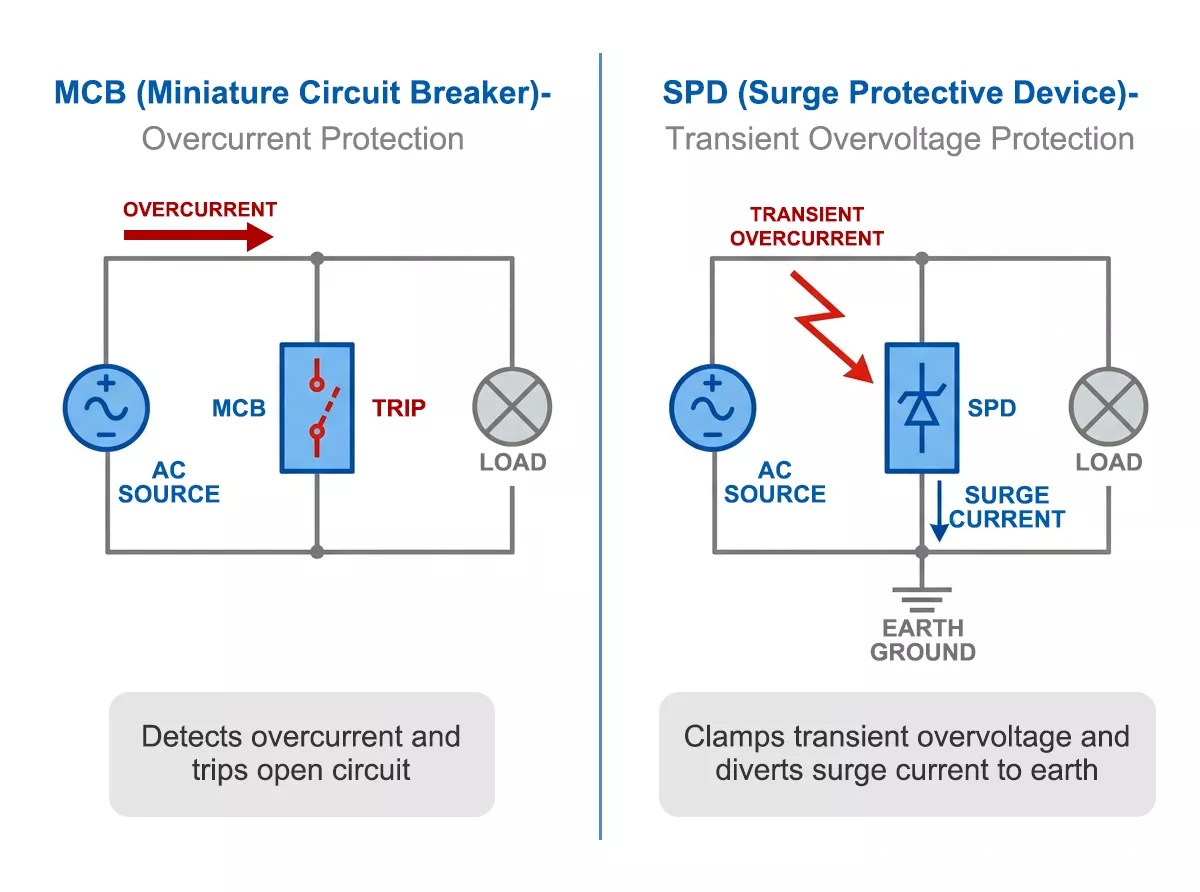
Figure 2 — SPD vs circuit breaker protection principle — SPD clamps overvoltage in parallel while MCB interrupts overcurrent in series
Why Every SPD Needs Its Own SCPD
When a MOV fails short-circuit, fault current flows continuously through the surge protector’s branch. The main breaker upstream may or may not trip — it depends on the fault current magnitude relative to the main breaker’s rating. In many installations, the impedance of the failed device limits fault current to a level below the main breaker’s instantaneous trip threshold. The module overheats, but the main breaker sees nothing abnormal.
IEC 61643-12 requires a separate SCPD on the SPD branch — either a fuse or an MCB sized to the surge protector’s short-circuit withstand rating and the installation’s prospective fault current. If the SPD fails, only the SCPD trips. The rest of the panel stays energised.
The MCB curve type is an engineering decision, not a standard mandate. IEC 61643-12 does not prescribe B curve or C curve — it requires coordination with the SPD manufacturer’s data. But the reasoning behind the choice is worth understanding.
A B curve MCB trips magnetically at 3–5 times its rated current (In). A C curve trips at 5–10 times In. During a normal surge event, the SPD briefly conducts discharge current that can reach hundreds of amps for microseconds. A B curve SCPD with its lower magnetic trip threshold risks nuisance tripping during the surge — disconnecting the SPD at the moment it needs to work. A C curve SCPD tolerates higher transient pulses without false tripping, keeping the SPD online through the event.
We have seen B curve SCPDs trip during thunderstorms at industrial sites — the SPD was healthy, but the SCPD disconnected it. The panel lost surge protection for hours before anyone noticed. After switching to C curve MCBs matched to the manufacturer’s coordination table, the problem disappeared. For reference, our TRS-C40 Type 2 SPD (In 20 kA, Imax 40 kA, Uc 275 V) coordinates with a 32 A C curve MCB as SCPD in panels with a main breaker up to 63 A — the coordination data is listed in the product datasheet.
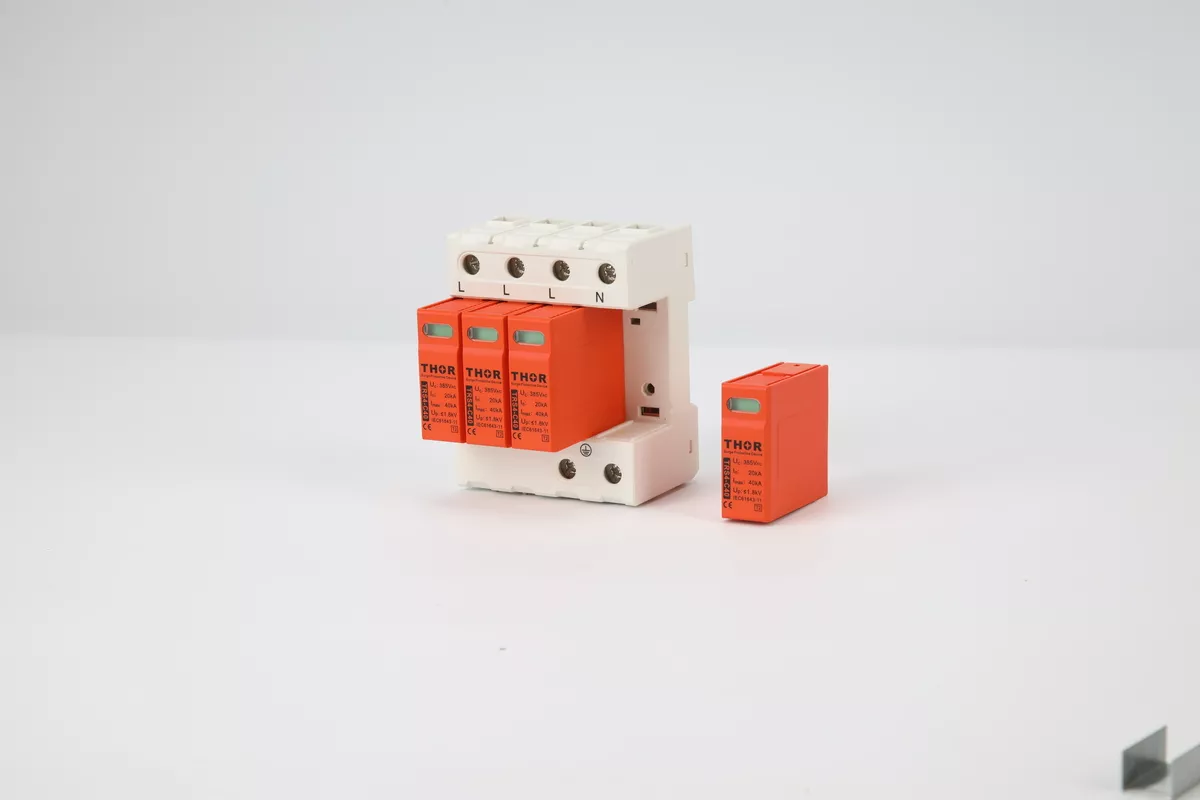
Figure 3 — Thor TRS-C40 Type 2 SPD with pluggable module and visual fault indicator
As shown in Figure 4, the B curve magnetic trip zone overlaps with typical SPD discharge current peaks, while the C curve zone sits above them. Always confirm the SCPD rated current and curve type against the SPD datasheet before installation.
The table below gives a general sizing reference — always cross-check against the specific SPD manufacturer’s coordination data.
| Main Breaker Rating | SCPD Rating | Recommended Curve | SPD *Imax* Range |
| ≤63 A | 20–32 A | C | 10–20 kA |
| 63–125 A | 32–63 A | C | 20–40 kA |
| 125–250 A | 63–125 A | C | 40–100 kA |
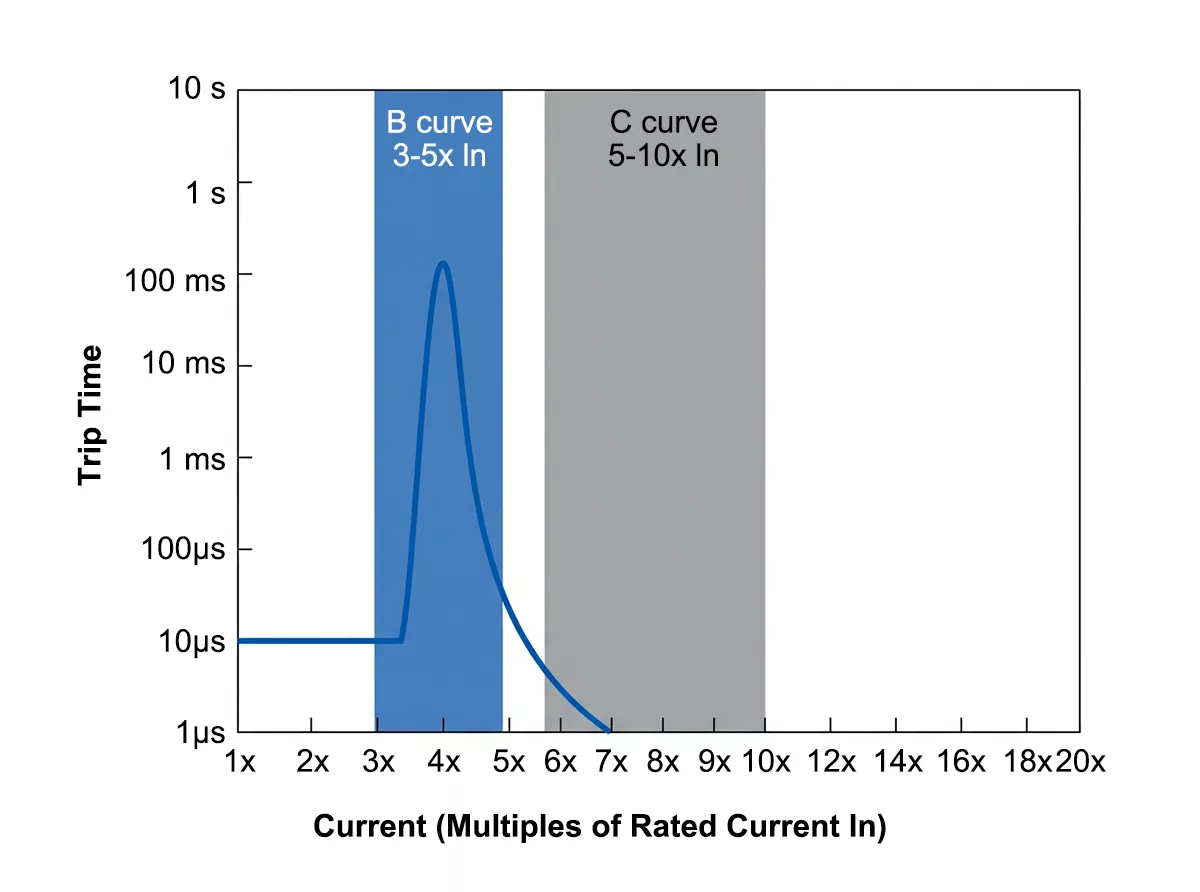
Figure 4 — B curve vs C curve MCB magnetic trip characteristics relative to SPD discharge current
Where the RCD Fits In
An RCD (residual current device) detects a third fault type that neither the MCB nor the SPD covers: earth leakage current. When current flowing out on the line conductor does not match the current returning on neutral — because some is leaking through a person or through damaged insulation to earth — the RCD trips within milliseconds. Its job is personal safety, not equipment or wire protection.
Positioning between the surge protector and the RCD drives real engineering consequences. When an SPD diverts surge energy to earth, it creates a brief current imbalance between line and neutral — exactly the kind of imbalance an RCD is designed to detect. If the surge protector sits downstream of the RCD, that discharge current flows through the RCD’s sensing coil and can trigger a nuisance trip, cutting power to the entire circuit during a storm.
The preferred layout is to install the SPD upstream of the RCD, on its own SCPD branch taken directly from the main busbar. Surge current flows to earth without passing through any RCD.
If the panel layout forces the surge protector downstream of the RCD, two precautions apply. First, verify that the device’s standing leakage current does not exceed 30% of the RCD’s rated residual operating current (IΔn). For a standard 30 mA RCD, that ceiling is 9 mA — most modern SPDs draw well under 1 mA, so the margin is wide. Second, select an RCD with surge immunity — S-type (selective, time-delayed) or a unit rated for transient surge withstand — so that brief SPD discharge pulses do not cause false trips.
Installation Order in a Distribution Board
The standard installation sequence in a TN-S or TT system runs as follows:
Main circuit breaker → SCPD (C curve MCB) → SPD (connected in parallel) → RCD → load MCBs → loads
The surge protector branch taps off the main busbar through its own SCPD before the RCD. Surge current diverts to the PE bar without passing through downstream protection devices. As shown in Figure 5, the three protection layers sit in a clear sequence — overcurrent first, overvoltage second, leakage third.
In a typical three-phase TN-S panel, a 4-pole TRS-B60 (In 30 kA, Imax 60 kA, Uc 275 V) on the SPD branch — protected by a 4-pole 40 A C curve MCB — covers most commercial and light industrial applications with margin.
Three wiring rules from IEC 61643-11 apply to every SPD installation:
• Total lead length (busbar → SPD → PE bar): ≤ 0.5 m — every extra centimetre adds inductance, raising the effective let-through voltage (Up) at the protected equipment
• Conductor cross-section: ≥ 6 mm² — undersized wire increases impedance and reduces clamping performance
• Earth resistance at PE bar: < 10 Ω — a high-impedance earth path limits surge energy discharge and can raise PE terminal voltage above safe touch limits in TT systems
For wiring layout examples across single-phase, three-phase and solar systems, see our SPD wiring diagram guide.
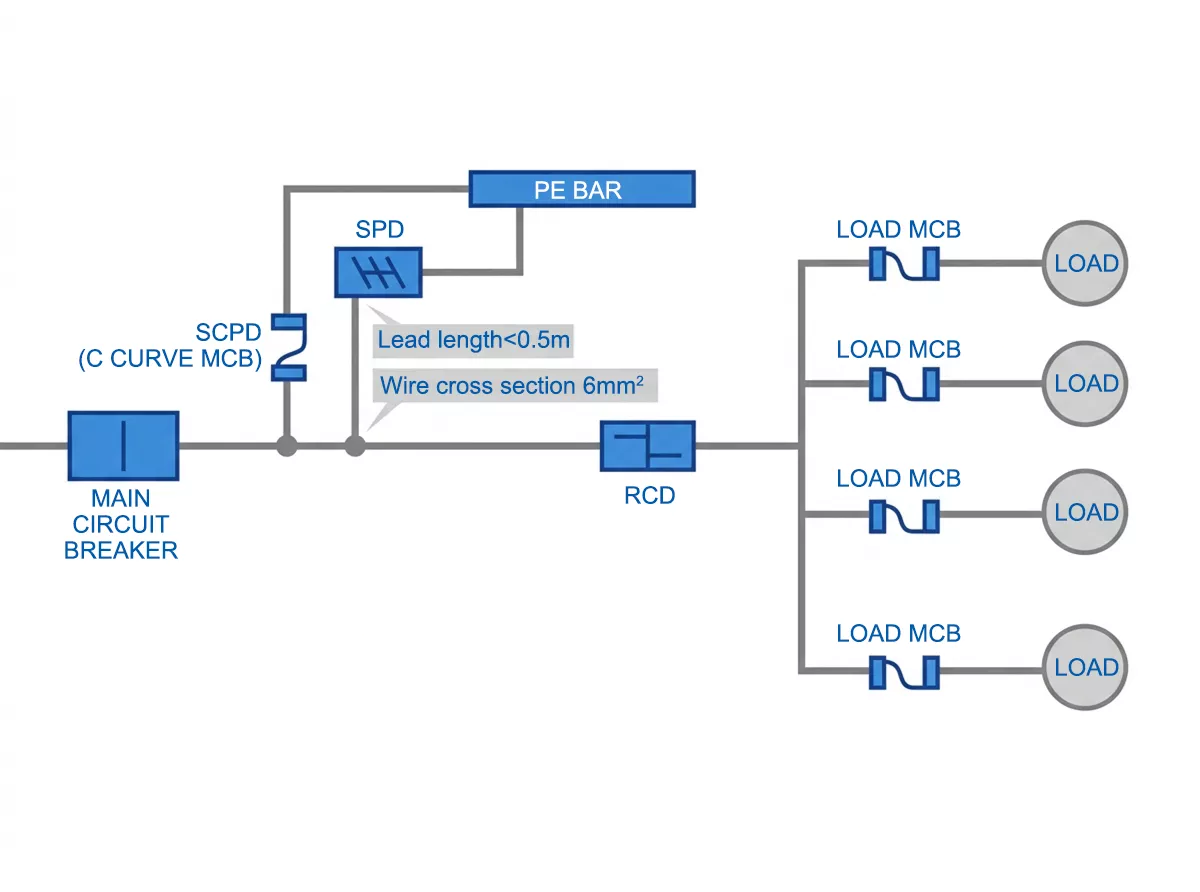
Figure 5 — SPD installation order in a distribution board — main breaker to SCPD to SPD to RCD to load MCBs
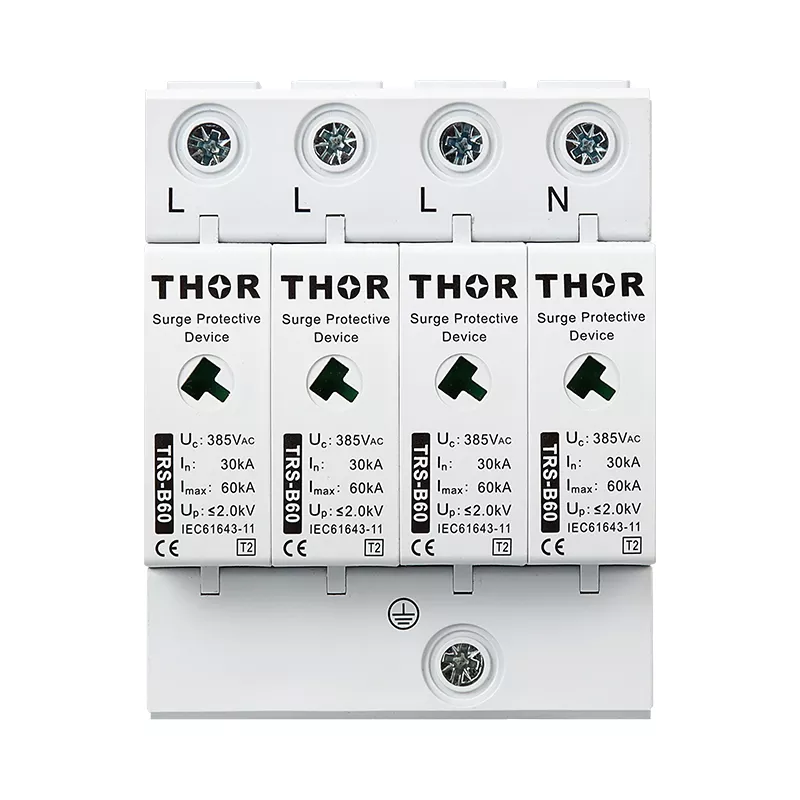
Figure 6 — Thor TRS-B60 4-pole Type 2 SPD for three-phase circuit breaker coordination
For installations with more than one SPD stage, check the SPD coordination rules as well as the physical wiring order.
SPD vs circuit breaker (MCB): quick comparison
The difference between an SPD and an MCB is the electrical quantity each responds to. An MCB opens the circuit when current exceeds its trip threshold; an SPD remains connected in parallel and conducts when transient voltage exceeds its protection threshold. An SPD and circuit breaker therefore work together rather than replace one another.
| Parameter | MCB | SPD | RCD |
| Protects against | Overcurrent (overload, short circuit) | Transient overvoltage (surges) | Earth leakage current (shock hazard) |
| Trigger | Current exceeds rated In | Voltage exceeds clamping threshold Uc | Current imbalance between L and N |
| Response time | Milliseconds to seconds | Nanoseconds | Milliseconds |
| Connection | In series | In parallel | In series |
| Standard | IEC 60898 / IEC 60947-2 | IEC 61643-11 | IEC 61008 / IEC 61009 |
| After activation | Resettable | Module may need replacement after end-of-life | Resettable |
| Protects | Wiring and cables | Equipment and electronics | People |
FAQ
What is an SPD in a circuit breaker panel?
An SPD (surge protective device) is a parallel-connected module installed in a distribution board to clamp transient voltage spikes and divert surge current to earth. It does not replace the circuit breaker — both sit in the same panel but respond to different threats. IEC 61643-12 requires the SPD to have its own upstream SCPD for backup protection.
Does an SPD replace a circuit breaker?
No. An SPD cannot interrupt sustained overcurrent — it has no switching mechanism to break the circuit. A circuit breaker cannot suppress voltage spikes — the surge is over before the breaker’s trip mechanism responds. Both are required in any properly protected installation. For a breakdown of SPD types and where each one sits in the protection chain, see our guide on Type 1 vs Type 2 vs Type 3 SPD.
What type of MCB should be used as an SCPD for an SPD?
IEC 61643-12 requires the SCPD to match the SPD manufacturer’s coordination data — the standard does not mandate a fixed curve type. In practice, C curve MCBs are widely preferred because their magnetic trip threshold (5–10× In) sits above typical SPD discharge current peaks, avoiding nuisance tripping during surge events. B curve MCBs (3–5× In) risk disconnecting the SPD mid-surge. Always confirm rated current and curve type against the SPD datasheet.
Can an SPD cause an RCD to trip?
Yes. When the SPD diverts surge current to earth, the resulting line-to-neutral current imbalance can trigger an RCD downstream. Install the SPD upstream of the RCD on a separate SCPD branch to avoid nuisance trips. If the SPD must sit downstream, select an RCD with surge immunity (S-type or HI-type) and verify the SPD’s standing leakage current stays below 30% of the RCD’s IΔn.
What is the difference between an SPD breaker and an MCB?
“SPD breaker” usually refers to the MCB or fuse used as backup short-circuit protection for an SPD, not a device that replaces the SPD. The SPD limits transient voltage, while the backup MCB disconnects the branch if the SPD fails short-circuit or draws fault current.
Thor Electric Surge Protection Devices
Compare Thor’s AC surge protection device range by SPD type and installation position.
Thor Electric manufactures IEC 61643-11 and TUV-certified AC and DC surge protective devices with pluggable modular design for field replacement without rewiring. Type 2 SPDs in the TRS series are available from 20 kA to 100 kA Imax, with visual fault indication and optional remote signalling contacts. Samples, custom Uc ratings and OEM configurations are available on request.
Need free testing samples, custom Uc ratings, or OEM configurations? Contact our engineering team today to discuss your project specifications or request a quick quotation.